SMH Meaning
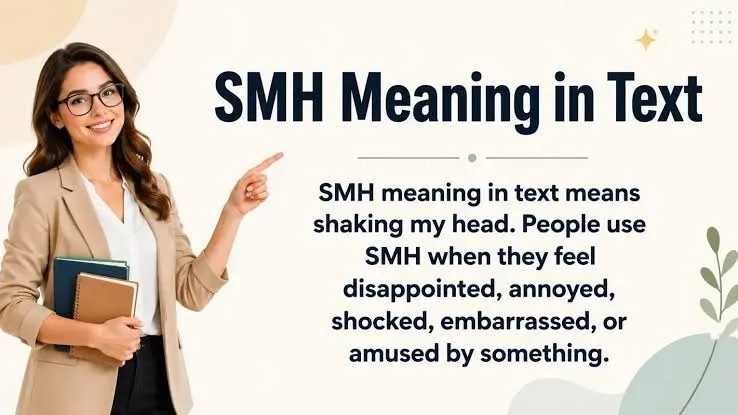
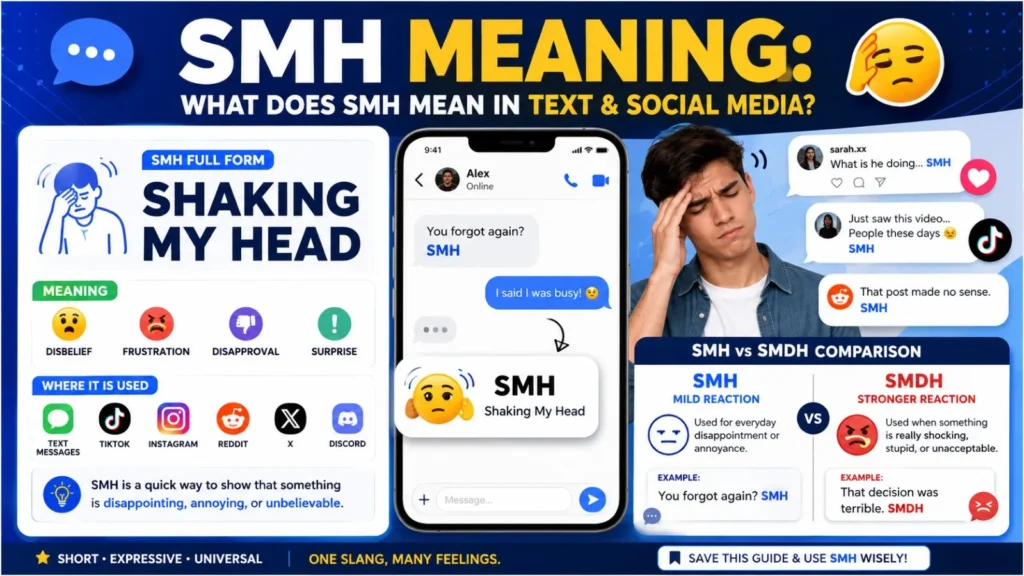
If you have seen SMH in a text, comment, or post and wondered what it means, the short answer is “Shaking my Head.” It is a common internet abbreviation used in digital communication to show disbelief, disapproval, dismay, frustration, or shock. Dictionary.com defines SMH as “shaking my head,” Merriam-Webster gives the same core meaning, and Cambridge notes that it is used in social media and text messages when you do not believe something or do not approve of it.
That is why the meaning of SMH is searched so often. People see it in DMs, captions, replies, and group chats, but the phrase itself is short enough that many readers want a quick translation before they keep reading. The good news is that the meaning is simple, and the tone is usually easy to understand once you see it in context.
What Does SMH Mean?
SMH stands for shaking my head. Merriam-Webster describes it as an abbreviation used to express disapproval, dismay, or disbelief, while Dictionary.com says it can show disbelief, disgust, or shock. Cambridge also places it squarely in the world of social media and texting.
In plain English, SMH is a reaction. It usually means:
- “I cannot believe this.”
- “That is disappointing.”
- “That was a silly choice.”
- “I do not approve of that.”
Quick Meaning Summary
| Term | Meaning | Tone | Common Use |
| SMH | Shaking my head | Mild frustration, disbelief, disapproval | Texts, comments, captions |
| SMDH | Shaking my damn head | Stronger reaction | More emotional replies |
| SMH in context | Reaction to something annoying or unbelievable | Casual | Social media and chat |
Full Form and Pronunciation
The full form of SMH is shaking my head. Merriam-Webster and Dictionary.com both treat it as a short form built from the phrase itself. In speech, people usually say the letters “S-M-H” or simply understand the phrase without reading it aloud.
You will often see it written in lowercase or uppercase:
- SMH
- smh
Both are common online, and both mean the same thing.
Origin and History
SMH comes from digital communication and internet slang. Dictionary.com traces its origin to digital communications, and Merriam-Webster explains that it is formed from the first letters of the phrase shaking my head. In other words, it works like a compact reaction shorthand, similar to other internet abbreviations.
It became popular because online messages are short, fast, and often emotional. Instead of typing a full sentence like “I am disappointed by that,” people can simply write SMH and let the tone do the work. That makes it especially natural in texting and social media. This is an inference from how the term is described in the sources and how it is used in examples.
How Is SMH Used in Text Messages?
SMH is used when someone wants to react to something ridiculous, annoying, embarrassing, or hard to believe. Merriam-Webster says it often carries a sense of bemused incredulity, frustration, or disapproval. Cambridge gives the same Practical Idea: it is used when you do not believe something or do not approve of it.
Use SMH when the situation feels like this:
- someone made a poor decision
- a plan failed for an obvious reason
- a post feels shocking or careless
- a message makes you want to react without writing a full paragraph
Examples of SMH in Text
- “He forgot the meeting again. SMH.”
- “You sent the file to the wrong person? SMH.”
- “They raised the price overnight. SMH.”
- “You really did that without checking first? SMH.”
SMH on Social Media
SMH appears everywhere online because it is fast, expressive, and easy to understand. Merriam-Webster includes examples from X, Reddit, and Bluesky, which shows that the term is still active across modern social platforms. Cambridge also specifically mentions use in social media and text messages.
It is common on:
- TikTok captions
- Instagram comments
- Snapchat chats
- Facebook replies
- Reddit threads
- X posts and replies
- Discord messages
Social Media Examples
- “Bro posted the wrong answer twice. SMH.”
- “They cancelled the event at the last minute. SMH.”
- “That edit was wild. SMH.”
- “He really thought that would work. SMH.”
SMH vs SMDH
A common variation is SMDH, which Merriam-Webster defines as “shaking my damn head.” It is the stronger version of SMH and sounds more intense.
Difference at a Glance
| Expression | Full Form | Intensity | Best For |
| SMH | Shaking my head | Mild | Casual disappointment |
| SMDH | Shaking my damn head | Strong | Bigger Frustration or stronger disbelief |
Examples
- “He forgot his keys again. SMH.”
- “He forgot his keys, locked the car, and left us outside. SMDH.”

Does SMH Have Other Meanings?
Yes. In most searches, SMH meaning refers to the slang term, but the letters can also be used in other contexts. For example, SMH can refer to the Sydney Morning Herald, and it is also used as a ticker symbol for the VanEck Semiconductor ETF. That is why context matters so much when you see the term online.
If the surrounding words are about texting, reactions, or social media, the slang meaning is almost certainly the correct one. If the context is finance or news media, it may mean something else. That is an inference based on the alternate uses found in the sources.
Common Misunderstandings
Here are the mistakes people make most often:
1. Thinking SMH is always rude
It is not always rude. It can be playful, tired, disappointed, or mildly annoyed depending on context.
2. Using it in formal writing
SMH belongs in casual chat, not professional emails or academic writing.
3. Confusing it with literal head movement
In text, SMH is usually a reaction, not a physical action.
4. Ignoring tone
The same abbreviation can sound funny, sarcastic, or dismissive depending on the surrounding context.
5. Forgetting alternate meanings
Outside slang, the letters can refer to other names or organizations, so context is important.
Related Terms and Similar Meanings
These slang terms often appear near SMH in text and comments:
- SMDH — shaking my damn head
- LOL — laughing out loud
- TBH — to be honest
- SMH vs SMDH — mild vs Stronger Reaction
- facepalm — a similar reaction to disappointment
- I cannot — informal expression of disbelief
People Also Ask
A: SMH means shaking my head. People use it to show disbelief, frustration, disappointment, or disapproval in a casual message.
A: It has the same meaning on TikTok: shaking my head. It usually reacts to something silly, annoying, embarrassing, or unbelievable.
A: Not always. It can be playful or lighthearted, but it can also sound dismissive depending on the tone of the message.
A: SMH is milder. SMDH is a stronger version that adds more emotional intensity. Merriam-Webster lists SMDH as “shaking my damn head.”
A: It is generally treated as an abbreviation or initialism in digital language. Dictionary sources describe it as a short form used in online communication.
Conclusion
Understanding SMH meaning is simple: it stands for “shaking my head” and is commonly used in texts, comments, and social media posts to express disbelief, disappointment, frustration, or disapproval. Whether someone is reacting to a surprising statement, a silly mistake, or an unbelievable situation, SMH provides a quick way to share an emotional response without writing a full sentence.
Although it started as internet slang, SMH has become a normal part of modern digital communication. You will often see it on platforms like TikTok, Instagram, Reddit, X, and in everyday conversations between friends. However, its meaning can change slightly depending on the context and tone. It may sound funny, sarcastic, playful, or critical based on how it is used.
Remember that SMH is best suited for casual conversations. It should generally be avoided in professional emails, academic writing, or formal communication. If you want to express stronger frustration, SMDH (“shaking my damn head”) is a more intense variation.
By knowing what SMH means in text and social media, you can better understand online conversations, memes, and Modern Slang. As digital language continues to evolve, learning these common abbreviations helps you communicate more naturally and stay updated with internet culture.