For Sure Slang Meaning
The phrase For Sure is simple, but it can do a lot of work in everyday English. At its core, it means definitely or certainly. In casual conversation, though, people also use it to mean yes, absolutely, or I agree. That is why it shows up so often in texts, chats, comments, and spoken replies.
Searchers usually ask about this phrase because it sounds easy, but the tone is not always obvious. In some messages, it definitely feels friendly and confident. In other situations, it can sound short, slightly sarcastic, or even unsure depending on punctuation and context.
This guide explains the slang meaning of for sure, how people use it naturally, whether it sounds rude, and how it compares with similar phrases like sure, absolutely, and bet. It also gives clear examples so readers can understand the phrase in real conversations, not just in dictionary definitions.
What Does “For Sure” Mean in Slang?
In slang and casual speech, for sure usually means:
- definitely
- certainly
- without a doubt
- yes, I agree
- I’m confident about that
In a text or chat, it often works as a relaxed confirmation. For example:
- “Are you coming tonight?”
“For sure.”
That reply means the person is saying yes in a friendly, casual way.
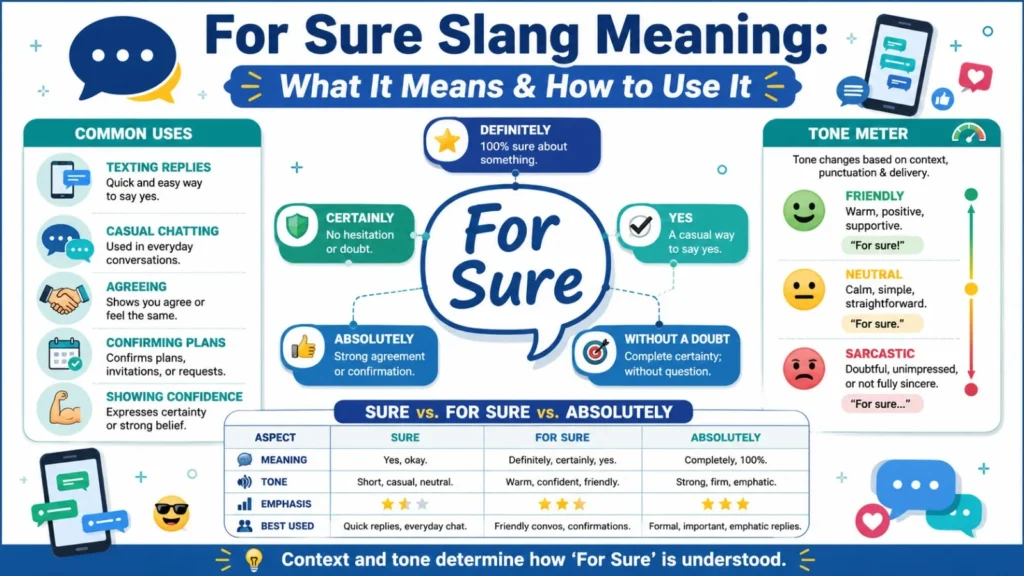
Quick Meaning Summary
| Phrase | Core Meaning | Tone | Best Use |
| for sure | definitely / certainly | casual, confident | texting, speech, replies |
| sure | yes/okay | short, neutral | quick agreement |
| absolutely | completely / definitely | stronger, polished | formal or emphatic replies |
| bet | okay / agreed | modern, casual | Gen Z texting, informal chat |
Is “For Sure” Slang or Standard English?
For sure is not brand-new internet slang. It is a common informal phrase that has been used for a long time. It appears in standard dictionaries, which means it is accepted English, not just online slang.
At the same time, people still use it like slang in texting and casual conversation because it sounds relaxed, natural, and easy. That makes it a phrase that lives in both worlds: standard English and informal chat language.
How People Use “For Sure” in Real Life
People use for sure in several ways.
1. To show agreement
“Do you want to go?”
“For sure.”
2. To confirm something
“Are you free tomorrow?”
“For sure, after 5.”
3. To sound confident
“That plan will work for sure.”
4. To sound casual and friendly
“I can help with that.”
“For sure.”
5. To show enthusiasm
“You nailed it!”
“For sure!”
“For Sure” in Text Messages and Chat
In texting, for sure is popular because it feels short, easy, and natural. It can mean yes without sounding stiff.
Common chat versions include:
- For sure
- For sure!
- For sure, I will
- For sure, no problem
- For sure, Sounds Good
Why tone matters
The meaning changes a lot depending on punctuation and context.
- For sure. → neutral, calm
- For sure! → upbeat, supportive
- For sure… → hesitant, doubtful, or sarcastic
- For sure?? → confused or skeptical
So the phrase itself is simple, but the tone is not.
Is “For Sure” Rude?
Usually, no.
Most of the time, for sure sounds:
- friendly
- neutral
- relaxed
- confident
It can sound rude only when the situation or delivery makes it feel cold, impatient, or sarcastic. For example, a dry “for sure…” may sound like the person is not fully sincere.
So the phrase is not rude by default. The tone decides how it feels.
For Sure vs Sure vs Absolutely
These phrases are similar, but they do not feel the same.
Sure
Shorter and more minimal. It can feel casual, neutral, or even a little detached.
For sure
A little warmer and more expressive. It feels more natural in friendly conversation.
Absolutely
Stronger and more polished. It sounds more emphatic and can work well in professional or clear agreement settings.
Example:
- “Can you send it later?”
“Sure.”
“For sure.”
“Absolutely.”
All three mean agreement, but each one carries a different energy.
Examples of “For Sure” in Sentences
Here are practical examples with different tones:
- “Are you coming to the party?” “For sure.”
- “That movie was great, for sure.”
- “For sure, I can help you with that.”
- “He is for sure the best player on the team.”
- “We should do it this weekend.” “For sure.”
- “That rumor is true for sure.”
- “For sure, let me check.”
- “You want coffee?” “For sure.”
- “For sure, no worries.”
- “For sure maybe” can be used jokingly when someone is being playful or unsure.
Related Slang and Similar Phrases
Readers often search for phrases that carry the same kind of energy. Useful related terms include:
- bet
- no doubt
- absolutely
- definitely
- fo shizzle
- for sure, for sure
- say less
- without question
These phrases are not always identical, but they often overlap in casual use.
Common Mistakes
1. Using it in formal writing
Do not use for sure in a formal email or academic paper unless the tone is intentionally informal.
2. Thinking it always means strong enthusiasm
Sometimes it simply means “yes,” not excitement.
3. Ignoring context
A short for sure can sound warm, flat, or sarcastic depending on the conversation.
4. Overusing it
If every reply is for sure, the phrase can start to feel repetitive.
When “For Sure” Sounds Most Natural
Use for sure when you want to:
- agree casually
- confirm a plan
- sound friendly
- keep the reply relaxed
- avoid sounding too formal
It works especially well in:
- text messages
- DMs
- social media comments
- group chats
- everyday conversation
When to Avoid It
Avoid for sure when the situation is:
- highly formal
- legal or professional writing
- serious business communication
- a place where a more precise answer is better
In those cases, yes, certainly, or absolutely may sound clearer.
Common Misunderstandings
Does “for sure” always mean 100%?
Not always. In casual speech, it often means strong agreement, but the exact strength depends on context.
Is it the same as “yes”?
Often yes in conversation, but it feels More Conversational and more natural in informal settings.
Can it be sarcastic?
Yes. A drawn-out or oddly timed for sure can sound sarcastic or doubtful.
Is it modern slang?
It is a long-used informal phrase that still behaves like slang in texting and online chat.
People Also Ask
A: It usually means yes, definitely, or certainly. In chat, it sounds casual and easygoing.
A: It is a common informal phrase that also behaves like slang in texting and speech.
A: Yes. Tone, timing, and punctuation can make it sound sarcastic or doubtful.
A: “Sure” is shorter and more minimal, while “for sure” often feels warmer and more conversational.
A: No. It is best for informal conversation, texting, and casual writing.
Conclusion
The for sure slang meaning is simple at its core: it means definitely, certainly, or without a doubt. In everyday conversations, texts, and social media, however, it does much more than express certainty. People use for sure to agree with someone, confirm plans, show confidence, or keep a conversation friendly and relaxed. Depending on the context, punctuation, and tone, it can also sound enthusiastic, playful, or even slightly sarcastic.
Although for sure appears in standard dictionaries, its frequent use in texting and casual speech gives it a slang-like feel that makes it popular across different age groups. Knowing when and how to use it helps you sound more natural in English, whether you’re chatting with friends, replying on social media, or sending a quick text.
The next time someone asks, “Are you in?”, you’ll know that replying “For sure!” is an easy, confident, and natural way to say yes. If you’re interested in learning more everyday Expressions, explore our other slang meaning guides to expand your modern English vocabulary and communicate with confidence.