Introduction
If you have seen DTTM in a text, DM, comment, or social post, the most common meaning is “Don’t Talk To Me.” That is the main reading used in texting and internet slang sources, and it usually signals that someone wants space, silence, or a pause in the conversation.
People use DTTM when they are tired, annoyed, overwhelmed, joking around, or simply not in the mood to keep chatting. The phrase can sound blunt, so the tone depends heavily on the relationship and the surrounding message. In a serious argument, it may feel harsh. In a playful exchange with a close friend, it can sound dramatic rather than hostile.
This guide explains the DTTM Meaning in Text, how to use it naturally, when it feels rude, and what similar abbreviations mean.
What Does DTTM Mean in Text?
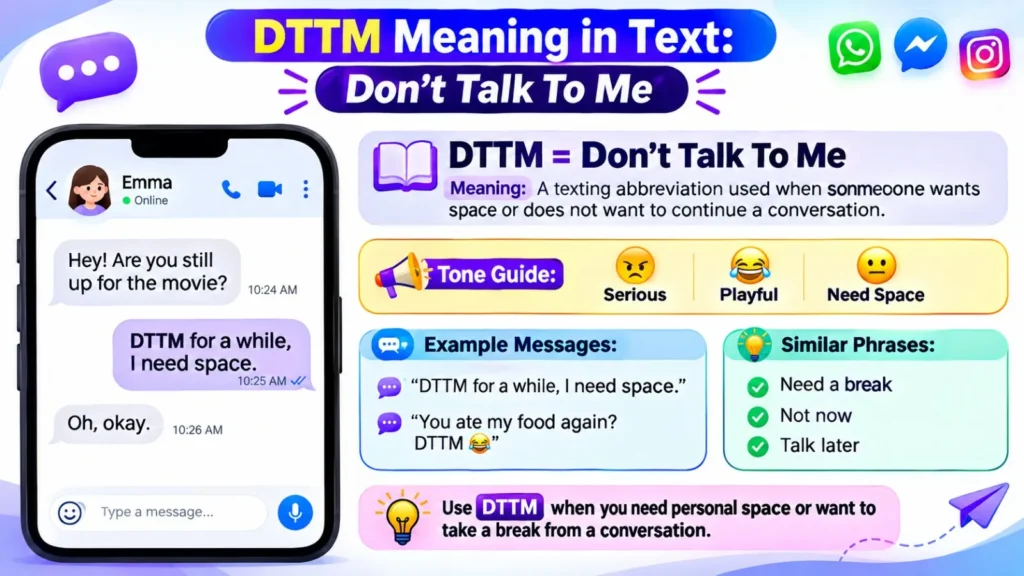
DTTM stands for Don’t Talk To Me. It is an informal texting abbreviation used when someone wants distance, quiet, or a break from conversation. Current slang sources describe it as a way to say the sender does not want to engage right now.
Quick Meaning Summary
| Term | Meaning | Typical Tone | Best Use |
| DTTM | Don’t Talk To Me | blunt, annoyed, playful, serious | casual texting, DMs, social media |
| DTM | Depends on context | varied | slang, acronyms, chat |
| TTYN | Talk To You Never | dismissive | joking shutdowns |
| DWTTAI | Don’t Want To Talk About It | softer than DTTM | polite boundary-setting |
Is DTTM Rude?
DTTM can be rude, but it is not always rude. The meaning itself is direct, and direct messages can sound cold if the other person expects a softer reply. In a heated chat, it may come across as dismissive. In a joking conversation, especially with someone who understands your style, it can feel more like playful exaggeration.
A good rule is simple: if you want to sound polite, DTTM is usually not the best choice. If you want to sound firm, sarcastic, or dramatic, it may fit the moment.
How DTTM Is Used in Real Conversations
People usually send DTTM when they want to stop the conversation without typing a full explanation. It can express frustration, exhaustion, social burnout, or a need for space. Noslang describes it as something used when someone feels overwhelmed or does not want to communicate, while CyberDefinitions explains that it means the sender would rather not be spoken to about the topic.
Common uses include:
- when someone is tired or mentally drained
- when they are annoyed by repeated messages
- when they need a break from talking
- when they are joking in a dramatic way
- when they want a conversation to stop
Examples of DTTM in Text
Here are natural examples of DTTM in context:
- “I’ve had a rough day. DTTM for a little while.”
- “Bro, DTTM, I am not explaining this again.”
- “You ate my fries again? DTTM 😂”
- “DTTM right now, I need space.”
- “Not today. DTTM.”
These examples show that the meaning stays the same, but the tone changes based on the words around it and the emoji use.
DTTM on Social Media
DTTM can appear on TikTok, Instagram, Snapchat, Discord, X, and private group chats. In those places, the abbreviation often works as a quick reaction rather than a full sentence. Slang directories and meaning sites describe it as a texting-style shorthand that appears in casual digital communication.
Platform Use Guide
| Platform | How DTTM May Appear | Usual Tone |
| TikTok | comment or Caption | dramatic, joking, annoyed |
| DM or story reply | playful or dismissive | |
| Snapchat | quick chat reply | casual, fast, emotional |
| Discord | gaming or group chat | direct, short, joking |
| X | reply or post | punchy, sarcastic |
| message or comment | less common, still casual |
DTTM vs Similar Slang
DTTM belongs to the family of short shutdown or boundary-setting abbreviations. It is more direct than many alternatives, which is why it can feel sharper.
| Phrase | Meaning | Tone |
| DTTM | Don’t Talk To Me | direct, blunt |
| DWTTAI | Don’t Want To Talk About It | softer, more polite |
| TTTH | Talk To The Hand | rude, joking, old-school |
| TTYN | Talk To You Never | dismissive, dramatic |
| AFK | Away From Keyboard | unavailable, neutral |
| BRB | Be Right Back | temporary pause, neutral |
If you want to set a boundary without sounding harsh, DWTTAI or a plain sentence like “I need a minute” is usually safer.
Other Possible Meanings of DTTM
While Don’t Talk To Me is the main texting meaning, acronym directories list several alternate expansions. Abbreviations.com includes entries such as DownTown ToastMasters Club, Dance To The Music, and Degree in Travel and Tourism Management, among others. CyberDefinitions also lists “Don’t Text the Mobile” as a secondary meaning.
That means context is everything. In a casual text, the slang meaning is usually the correct one. In a business, academic, or organizational setting, DTTM could mean something completely different.
When You Should Avoid Using DTTM
Avoid DTTM when you want to sound respectful, professional, or emotionally careful. Because it is so blunt, it can feel cold in workplace chats, customer messages, family conversations, or talks with someone who may not understand your tone. The more direct the phrase, the more likely it is to be read as a shutdown.
Use a softer alternative instead:
- “I need some space.”
- “Can I reply later?”
- “I am not up for talking right now.”
- “Let’s talk another time.”
- “I need a break.”
These options keep the boundary clear without sounding dismissive.
Common Misunderstandings
1. DTTM is not always meant literally
Sometimes people use it jokingly or dramatically, especially with close friends.
2. DTTM is not a universal acronym
It has alternate meanings in acronym directories, so text context matters.
3. DTTM is not the same as being unavailable
It is more about not wanting to talk than simply being offline.
4. DTTM can sound harsher than intended
Without emojis, tone words, or familiar context, it may seem more serious than the sender meant.
Related Terms and Similar Meanings
If someone uses DTTM, they may also be trying to express one of these Ideas:
- leave me alone
- not now
- give me space
- do not message me
- I am overwhelmed
- I am not in the mood
- let’s talk later
- I need a break
These related phrases help explain why DTTM is so common in fast, emotional, or playful online conversations.
People Also Ask
A: It usually means Don’t Talk To Me. That is the most common texting meaning in slang and acronym sources.
A: It can be rude because it is very direct, but tone and context matter. With close friends, it may sound playful instead of offensive.
A: Yes. Acronym directories list unrelated meanings such as DownTown ToastMasters Club, Dance To The Music, and Degree in Travel and Tourism Management.
A: It is most often seen in casual texting, DMs, and social media chats, especially where short shorthand is common.
A: Say something softer like “I need space,” “I will reply later,” or “I am not up for talking right now.”
Conclusion
The most common DTTM meaning in text is “Don’t Talk To Me.” This abbreviation is widely used in casual conversations, social media posts, and private messages when someone wants space, feels annoyed, needs a break, or simply does not want to continue a conversation at that moment.
However, the meaning of DTTM depends on the situation and relationship between the people communicating. Among close friends, it may be used as a funny or dramatic reaction, while in serious conversations it can sound rude, dismissive, or unfriendly. Understanding the tone, emojis, and surrounding messages is important before interpreting what someone means.
Although “Don’t Talk To Me” is the most common texting definition, DTTM can also represent other phrases in different fields. This is why context is the best way to determine the intended meaning.
If you want to use DTTM yourself, consider your audience and purpose. For casual chats, it can be a quick way to Express your Feelings. For professional or sensitive conversations, softer phrases like “I need some space” or “I’ll reply later” are usually better choices.
As online communication continues to evolve, abbreviations like DTTM show how people use short phrases to express emotions, boundaries, and reactions quickly in the digital world.