Introduction
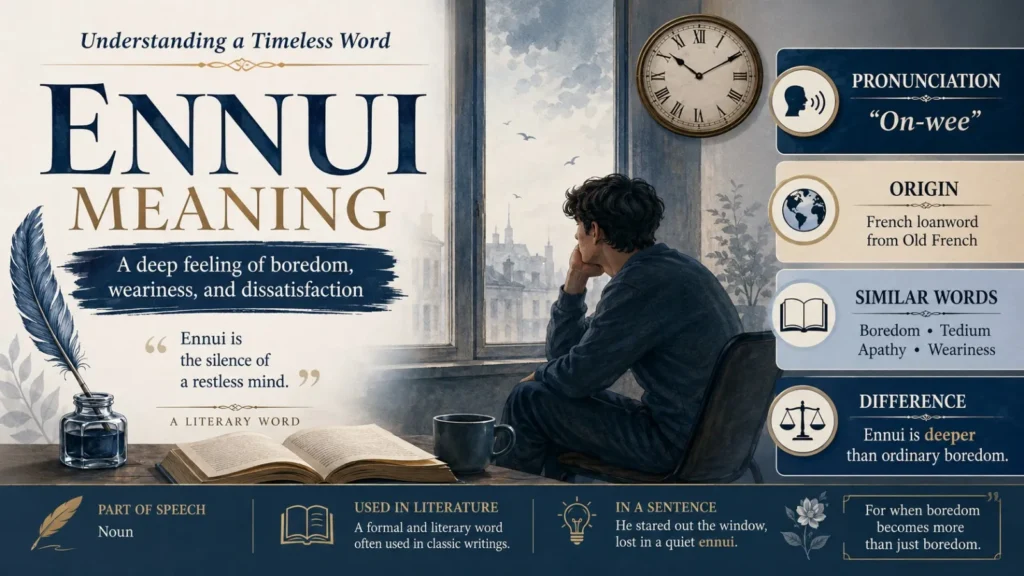
Ennui is a word for a deeper kind of boredom. It usually means a feeling of weariness, dissatisfaction, and mental tiredness that comes from having nothing interesting or exciting to do. Cambridge defines it as a feeling of being bored and mentally tired, and also marks it as a literary word. Merriam-Webster describes it as a specific sort of boredom, often tied to jadedness or life that feels too easy.
People search for Ennui Meaning because the word appears in books, articles, and social commentary, but it is not as common in everyday speech as boredom. That makes it useful for writers, students, readers, and anyone who wants a sharper word for emotional fatigue or stale routine. This article explains the definition, pronunciation, origin, synonyms, and differences between ennui, boredom, apathy, and tedium in simple English. Google recommends content that is helpful, reliable, and written for people first, so the goal here is to answer the query directly and completely.
What Does Ennui Mean?
Ennui means a feeling of boredom mixed with weariness, dissatisfaction, and lack of interest. It is not just “I have nothing to do.” It often suggests a heavier, more drained state, where nothing feels engaging enough to break the mood. Cambridge’s definition emphasizes being bored and mentally tired, while Merriam-Webster highlights boredom with a specific sense of jadedness.
Quick Meaning Summary
| Word | Simple Meaning | Tone |
| Ennui | Deep boredom, weariness, dissatisfaction | Literary, formal |
| Boredom | Lack of interest or excitement | Common, everyday |
| Apathy | Lack of feeling or concern | Emotional indifference |
| Tedium | Boredom caused by something repetitive | Formal, descriptive |
How to Pronounce Ennui
The standard pronunciation is usually written as on-wee or ahn-wee in English pronunciation guides. Cambridge gives it in UK and US pronunciation forms, and Collins shows a similar pronunciation pattern.
Pronunciation tip:
Say it slowly as on-wee. The ending is soft, and the word keeps a French-style sound.
Ennui Origin and Etymology
The word ennui comes from French. Merriam-Webster traces it through French and Old French back to a Late Latin root related to “to make loathsome,” and Dictionary.com also records the word as coming from French and Old French forms meaning boredom or displeasure. Etymonline notes that it entered English in the 1600s and was later nativized in the language.
Why the origin matters
Knowing the origin helps readers understand why ennui feels more refined or literary than plain “boredom.” It also explains why the word often appears in essays, novels, and cultural writing instead of casual conversation. Cambridge explicitly labels it as a literary word.

Ennui vs Boredom: What Is the Difference?
Although the two words overlap, they are not the same.
Boredom is simple and direct.
Ennui is deeper, slower, and more emotionally drained.
Merriam-Webster describes ennui as more than ordinary boredom, often involving jadedness, while Cambridge says it is a feeling of being bored and mentally tired. That makes ennui feel more like emotional exhaustion from repetition or lack of stimulation.
Easy distinction
- Boredom: “I have nothing interesting to do.”
- Ennui: “Nothing feels interesting enough to matter.”
That second line is an inference based on the dictionary definitions and usage patterns in the major sources.
Ennui vs Apathy vs Tedium
These words can overlap, but each one highlights something different.
Apathy is a lack of concern or feeling.
Tedium is boredom caused by repetition or wearisome routine.
Ennui combines boredom, dissatisfaction, and mental tiredness into one richer idea. Collins, Cambridge, and Merriam-Webster all point to this broader emotional tone.
Comparison Table
| Word | Core Idea | Best Use |
| Ennui | Deep boredom and dissatisfaction | Literary or thoughtful writing |
| Apathy | No concern or emotional response | Psychology, behavior, attitude |
| Tedium | Repetition that feels dull | Tasks, routines, long processes |
| Boredom | Simple lack of interest | Everyday speech |
Synonyms and Similar Words for Ennui

Useful synonyms and near-synonyms include:
- boredom
- tedium
- weariness
- listlessness
- lassitude
- languor
- dissatisfaction
- jadedness
- the blahs
Cambridge lists boredom and tedium as close matches, while Merriam-Webster emphasizes jadedness and a specific kind of boredom.
Ennui in a Sentence: Real Examples
Here are simple examples you can use in an article or assignment:
- After weeks of the same routine, she felt a deep ennui.
- The long, silent afternoon filled him with ennui.
- The novel captures the ennui of modern city life.
- He mistook his ennui for laziness, but it was really Emotional Fatigue.
- The character’s ennui made the story feel quiet and reflective.
These examples reflect the word’s literary tone and its meaning as a deeper form of boredom and mental tiredness.
Why Ennui Matters in Modern Life
Ennui is useful because it names a feeling many people know but do not always label well. It can show up in repetitive routines, low-stimulation environments, emotional burnout, or moments when life feels flat. Merriam-Webster’s description of jadedness and Cambridge’s note about mental tiredness both support this broader modern use.
It also matters for writers and readers because it adds precision. Instead of using the same word “bored” over and over, ennui gives you a more expressive and literary option.
Common Misunderstandings
Is ennui just another word for boredom?
Not exactly. It is close to boredom, but it usually feels deeper, more reflective, and more emotionally tired.
Is ennui a formal word?
Yes. Cambridge labels it as literary, which means it fits formal writing better than casual speech.
Is ennui negative?
Usually, yes. It often describes an unpleasant state of dullness, fatigue, or dissatisfaction. That said, writers sometimes use it in a stylized or artistic way.
Quick Meaning Summary
| Question | Answer |
| What does ennui mean? | A deep sense of boredom, weariness, and dissatisfaction. |
| How do you pronounce it? | Usually on-wee or ahn-wee. |
| Is it literary? | Yes, Cambridge marks it as literary. |
| Where does it come from? | French and Old French, with roots traced further back in Latin. |
| Is it the same as boredom? | Similar, but Ennui is Richer and more Emotionally Tired. |
People Also Ask
A: It means a deep feeling of boredom and mental tiredness. Cambridge describes it as boredom caused by having nothing interesting or exciting to do.
A: It is commonly pronounced like on-wee or ahn-wee.
A: Yes. It entered English from French, and its earlier forms come through Old French.
A: Boredom is the simpler word. Ennui suggests a more refined, exhausted, or emotionally flat type of boredom.
A: Yes. For example: “The long winter evenings filled her with ennui.” This fits the literary style of the word.
Conclusion
Ennui is more than simple boredom. It describes a deeper emotional state that combines weariness, dissatisfaction, and a lack of interest in life or daily activities. While boredom may happen because there is nothing to do, ennui often reflects a feeling that nothing feels meaningful, exciting, or engaging enough.
Understanding the ennui meaning helps you recognize why this word appears so often in literature, psychology, and Cultural Discussions. As a French loanword with a long history, it carries a more thoughtful and literary tone than everyday words like “boredom” or “tiredness.”
Whether you are reading a novel, writing an essay, or simply looking for the right word to describe emotional fatigue, ennui provides a more precise way to express a sense of emptiness and dissatisfaction. By knowing its pronunciation, origin, synonyms, and differences from related words like apathy and tedium, you can use it more confidently and accurately.