
ETA Meaning
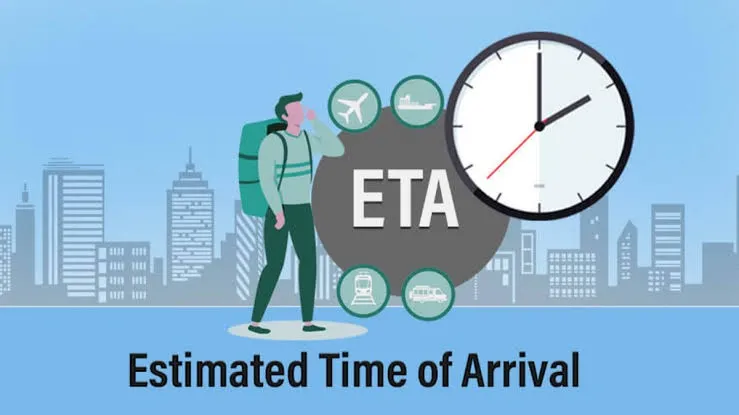
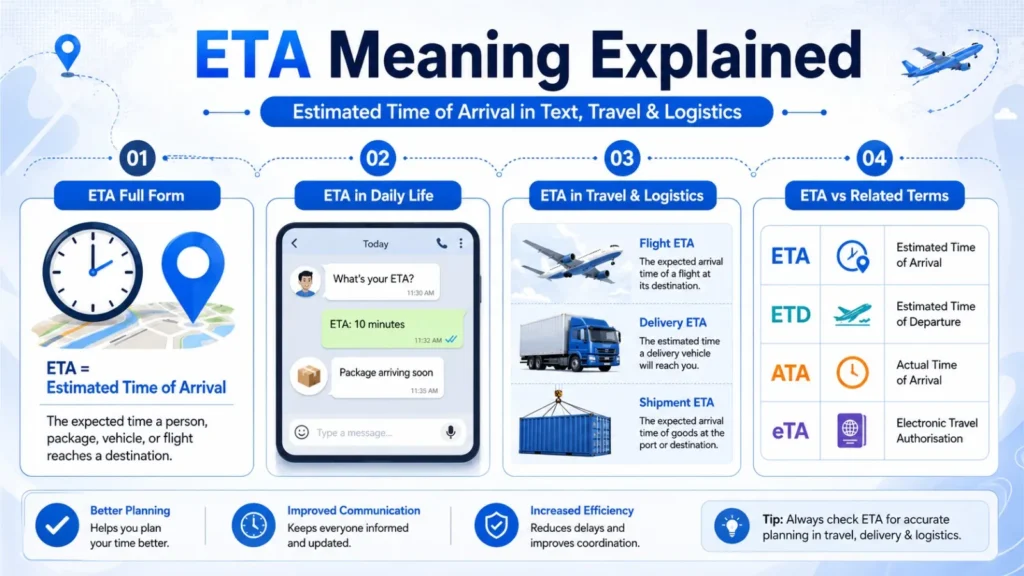
ETA stands for Estimated Time of Arrival. It tells you when a person, package, flight, vehicle, or service is expected to reach a destination. In simple terms, ETA is an estimate, not a promise. It changes when traffic, distance, speed, route changes, or delays affect the journey. That is why ETA appears so often in delivery apps, flight systems, shipping updates, and everyday conversations.
Quick Meaning Summary
| Term | Full form | What it means | Common use |
| ETA | Estimated Time of Arrival | Expected arrival time | Texts, travel, shipping, delivery |
| ETD | Estimated Time of Departure | Expected departure time | Shipping, logistics, transport |
| ATA | Actual Time of Arrival | Real arrival time | Logistics, fleet tracking |
| eTA | Electronic Travel Authorisation | Travel permission system | UK and Canada travel |
ETA is the most common term here. ETD tells you when something is expected to leave, ATA tells you when it actually arrived, and eTA is a travel authorisation, not an arrival estimate.
What Does ETA Mean?
ETA means the time something is expected to arrive. Dictionaries and logistics references use this meaning consistently. Cambridge defines ETA as the abbreviation for estimated time of arrival, and Merriam-Webster lists the same abbreviation alongside the separate Greek-letter meaning of eta. Logistics sources also use ETA for shipments, vehicles, and package tracking.
Simple examples
- “What’s your ETA?”
- “My ETA is 15 minutes.”
- “The package ETA is tomorrow.”
- “Flight ETA: 8:45 PM.”
These are all natural ways to use ETA when you want to know when something will arrive.
ETA Meaning in Text Messages and Chat
In texting, ETA is a quick way to ask, “When will you get here?” or “How long until you arrive?” It is common in casual chats because it is short, fast, and easy to understand. People use it with friends, family, coworkers, delivery drivers, and anyone who needs a timing update. Punzlife’s 2026 coverage shows ETA being used in text-like and online contexts, while Locate2u also gives everyday conversational examples.
Text examples
- “ETA?”
- “What’s your ETA to the meeting?”
- “I’ll share my ETA once I leave.”
- “My ETA is around 10 minutes.”
In chat, ETA usually means arrival time, not completion time. If you mean task completion, a phrase like “expected finish time” is clearer. This is an interpretation based on the way the term is used in the sources above.
ETA Meaning in Logistics and Shipping
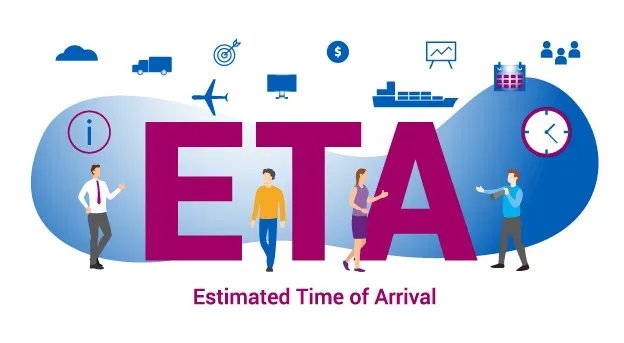
In logistics, ETA is one of the most important planning terms. It helps teams estimate when a shipment, truck, courier, or vessel will reach its destination. That timing supports warehouse planning, customer updates, route scheduling, and delivery management. DHL’s logistics guide, FreightAmigo’s shipping explainer, and Track-POD’s ETA article all use ETA this way.
Live ETA is especially important in modern delivery systems. Locate2u explains that ETA can be updated from current route data, traffic, and GPS movement, and Track-POD notes that dynamic ETA can be updated in a live tracking window. In other words, ETA is not fixed; it can change as real-world conditions change.
Why logistics teams care about ETA
- It improves customer communication.
- It helps manage delays.
- It supports route planning.
- It makes delivery windows More Accurate.
- It gives operations teams a better view of timing.
These benefits are consistently reflected in logistics-focused sources.
ETA in Flights, Travel, and Delivery Apps
ETA is also common in travel because people want to know when a flight, bus, taxi, ride-share, or delivery will arrive. Locate2u explicitly connects ETA with flights, drivers, parcel tracking, and delivery-style updates. In travel contexts, ETA usually means the expected landing or arrival time, not a visa or entry permission.
Common travel uses
- Flight ETA: expected landing time
- Bus ETA: expected arrival at a stop
- Ride-share ETA: pickup or drop-off estimate
- Food delivery ETA: expected delivery time
ETA vs ETD vs ATA
These acronyms are easy to mix up, but they mean different things.
ETA = Estimated Time of Arrival
ETD = Estimated Time of Departure
ATA = Actual Time of Arrival
Track-POD and SeaRates both describe these as standard logistics timing terms. ETA is the expected arrival, ETD is the expected departure, and ATA is the real arrival after it happens.
Comparison table
| Acronym | Meaning | When it is used |
| ETA | Estimated Time of Arrival | Before arrival happens |
| ETD | Estimated Time of Departure | Before departure happens |
| ATA | Actual Time of Arrival | After arrival happens |
Given that a shipment is still on the road, you talk about ETA. If it has already reached the destination, you record ATA. If it has not left yet, you use ETD.
How Is ETA Calculated?
ETA is usually calculated using current location, remaining distance, average speed, route conditions, traffic, and live tracking data. Track-POD explains that ETA calculation can use distance, speed, and cargo-related factors, while Locate2u shows how live tracking can recalculate ETA as the driver moves.
What can change ETA?
- traffic
- weather
- route changes
- loading or unloading delays
- extra stops
- unexpected disruptions
That is why ETA should always be read as an estimate, not a guarantee.
Common ETA Examples You Can Use
Here are practical examples of ETA in real life:
- Travel: “My ETA to the hotel is 7:30 PM.”
- Delivery: “Your order ETA is 20 minutes.”
- Work: “What is your ETA for the meeting?”
- Flights: “The flight ETA has changed.”
- Shipping: “Please check the shipment ETA.”
- Chat: “Send me your ETA before you leave.”
These examples reflect the broad, everyday use of ETA across travel, shipping, and casual conversation.
How to Use ETA Correctly in a Sentence
Use ETA when the focus is arrival time. It works best for people, vehicles, flights, parcels, and other things that are moving toward a destination.
Correct uses
- “What’s your ETA?”
- “The package ETA is tomorrow.”
- “The driver’s ETA is 12 minutes.”
- “Our flight ETA is 9:40 PM.”
Less natural use
- “What is your ETA of finishing this?”
That sounds awkward because ETA is usually tied to arrival, not task completion. A clearer version is: “When will you finish?” or “What is your estimated completion time?” This is an inference based on standard usage in the sources above.
What Does eTA Mean, and How Is It Different From ETA?
This is one of the biggest sources of confusion. ETA means Estimated Time of Arrival. eTA is different. Official travel pages show that eTA refers to an electronic travel authorisation used for entry into countries such as the UK and Canada. The UK government explains that an ETA is a travel authorisation that lets eligible travelers visit the UK for up to 6 months, while Canada’s official page uses eTA for its electronic travel authorization system.
Simple difference
- ETA = arrival time estimate
- eTA = travel authorisation
So if someone asks about ETA in shipping or chat, they almost always mean arrival time. If the topic is border entry, visas, or travel permissions, they may mean eTA instead.
Other Meanings of ETA
ETA can also mean the 7th letter of the Greek alphabet, according to Merriam-Webster. That is a separate meaning from the arrival-time abbreviation, and it is usually relevant in language, math, or scholarly contexts rather than daily texting or logistics.
Related Terms and Similar Meanings
Some related terms often appear near ETA:
- ETD — estimated time of departure
- ATA — actual time of arrival
- ATD — actual time of departure
- Live ETA — updated arrival estimate from tracking data
- Dynamic ETA — ETA that Changes in Real Time
- eTA — electronic travel authorisation
People Also Ask
A: ETA stands for Estimated Time of Arrival. It tells you when someone or something is expected to arrive. That is the most common meaning in dictionaries, travel, and logistics.
A: In text messages, ETA usually means the expected time a person will arrive. People use it for quick updates like “ETA 10 minutes” or “What’s your ETA?”
A: ETA is the estimated time of arrival. ETD is the estimated time of departure. One is about coming in, and the other is about leaving.
A: ETA is the predicted arrival time. ATA is the actual arrival time after the trip or shipment is complete.
A: No. ETA is an estimated arrival time. eTA is a travel authorisation system used by countries such as the UK and Canada.
Conclusion
ETA meaning is simple but widely useful: it stands for Estimated Time of Arrival and tells you when someone or something is expected to reach a destination. From casual text messages like “What’s your ETA?” to professional uses in shipping, logistics, flights, and delivery tracking, ETA helps people understand timing and manage expectations.
Although ETA is most commonly connected with arrival times, it is important to understand related terms like ETD (Estimated Time of Departure), ATA (Actual Time of Arrival), and eTA (Electronic Travel Authorisation) because they are often confused. Knowing the difference helps you use these abbreviations correctly in everyday and professional situations.
Whether you see ETA in a chat, a tracking notification, or a travel update, it usually refers to an expected arrival time. However, always consider the context because abbreviations can have different meanings in different fields. With its use across technology, transportation, and communication, ETA remains one of the most practical abbreviations in Modern Life.