Introduction
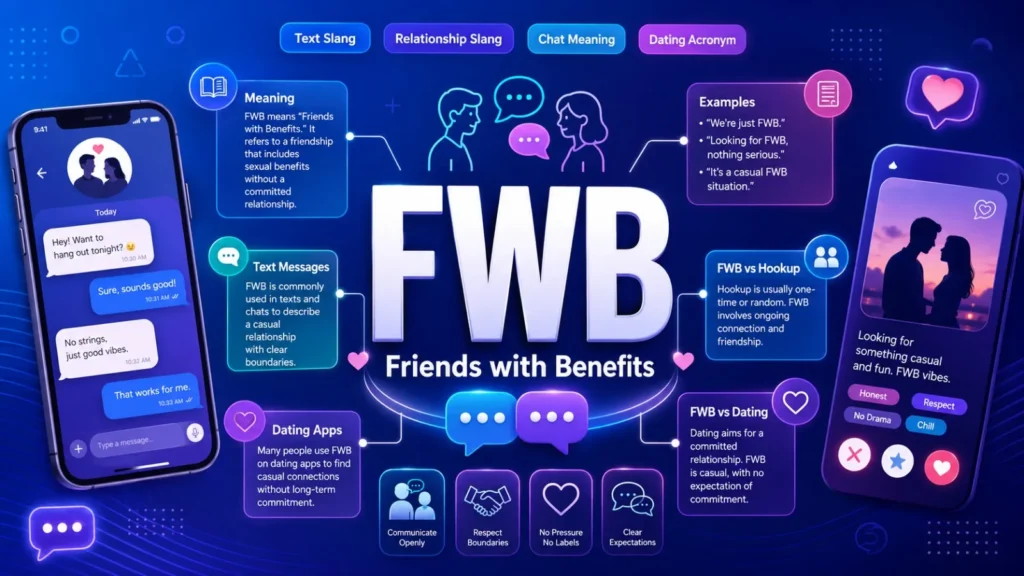
FWB is one of the most common slang acronyms used in texting, online chat, and dating conversations. It usually means “friends with benefits,” which refers to a friendship that includes physical intimacy without the commitment expected in a traditional romantic relationship. Merriam-Webster defines friend with benefits as a friend with whom one has casual sexual relations without commitments, while Dictionary.com gives a similar definition and lists FWB as the shorthand form.
People search for FWB Meaning because the acronym can feel vague if you see it in a message, a dating profile, or a conversation about relationships. It is also easy to confuse FWB with a hookup, casual dating, or a committed relationship. In plain English, FWB usually means two people know each other, stay friendly, and also share sexual or physical intimacy without calling it a full romance. Trusted relationship resources describe it as a casual arrangement that depends heavily on clear expectations and honest communication.
What Does FWB Mean?
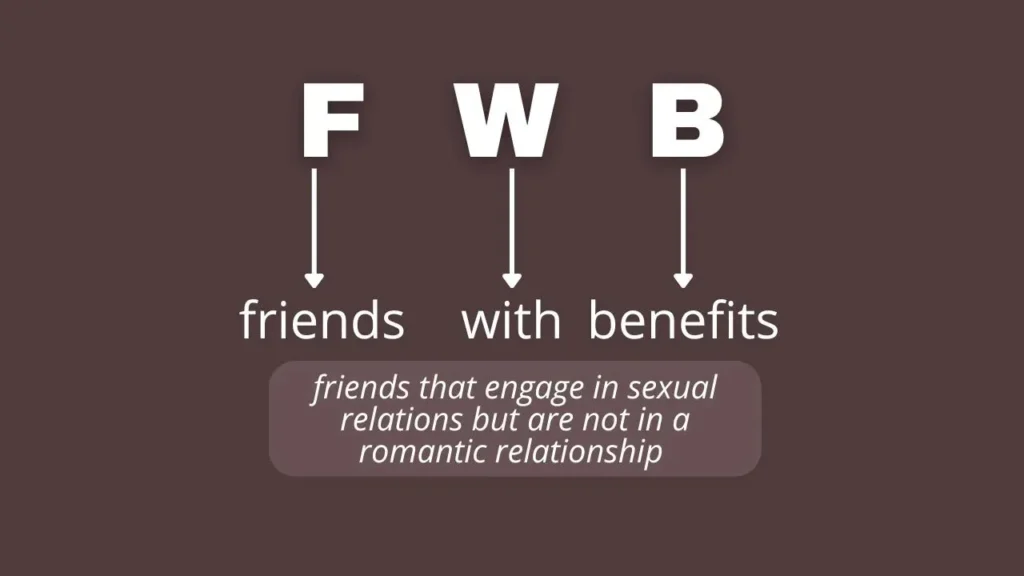
FWB stands for friends with benefits. In modern slang, it usually describes a friendship that includes sexual intimacy but does not involve the rules, expectations, or exclusivity of a committed relationship. That is the meaning most people want in text messages, dating apps, and chat conversations. Merriam-Webster also lists a separate technical meaning, four-wheel brake, but that is not the meaning people usually intend in everyday conversation.
Quick Meaning Summary
| Term | Meaning | Common Context |
| FWB | Friends with benefits | Texts, chats, dating apps |
| Hookup | Usually a one-time sexual encounter | Casual conversation |
| Dating | Romantic connection with possible commitment | Relationships |
| Relationship | More committed emotional bond | Long-term romance |
Origin and History
The modern slang phrase friends with benefits is often traced to the 1990s. Dictionary.com notes that the expression became associated with Alanis Morissette’s 1995 song “Head Over Feet,” and that it spread online in the early 2000s. That history explains why the term feels modern even though the idea behind it has existed for a long time.
How FWB Is Used in Text and Chat
In texting, FWB is used as a short way to describe a casual setup without calling it dating. People may use it to explain that they are friendly with someone, spend time together, and also have physical intimacy, but are not pursuing a traditional romantic relationship. Kids Help Phone describes FWB as people who know each other engaging in intimate or sexual activity without really dating, which matches how the term is commonly used in chat.
Example messages:
- “We are not dating, just FWB.”
- “He said he only wants FWB, not a relationship.”
- “That sounds more like FWB than a serious relationship.”
FWB on Dating Apps and Social Media
On dating apps and social platforms, FWB signals that someone wants closeness without traditional relationship commitment. Relationship guidance sources describe FWB as a casual arrangement that is often non-exclusive and depends on clear boundaries, open communication, and honesty if feelings change. That is why the phrase often appears near terms like casual, no strings attached, and not looking for anything serious.
FWB vs Hookup vs Dating
| Type | Main Feature | Emotional Connection | Commitment |
| FWB | Ongoing friendship plus intimacy | Usually some friendship | Low |
| Hookup | Usually a one-time encounter | Often minimal | Very low |
| Dating | Romantic connection | Usually higher | Medium to high |
Kids Help Phone draws a clear line between FWB and a hookup: a hookup is often a one-time encounter with someone new, while FWB usually involves people who already know each other. Verywell Mind also distinguishes FWB from more casual forms like one-night stands and booty calls by noting that FWB starts from an existing friendship and usually includes More Interaction.

Can FWB Turn Into a Real Relationship?
Yes, but not automatically. Some FWB arrangements do evolve into romance, but that only happens when both people want the same thing and communicate clearly. Verywell Mind notes that these arrangements can work only when people discuss expectations, respect boundaries, and check in honestly when feelings shift. Without that, one person may end up hurt or confused.
What Makes a FWB Arrangement Work?
A healthy FWB setup depends on communication, boundaries, and honesty. The people involved should agree on what the arrangement is, what it is not, and what happens if one person wants more. Sources that discuss FWB consistently emphasize that clear expectations help prevent misunderstandings and emotional pressure.
Common Misunderstandings About FWB
A common mistake is assuming FWB means the same thing as dating. It does not. Another mistake is thinking FWB is always emotionally simple. In reality, feelings can change, boundaries can blur, and the friendship can become complicated if expectations were never discussed. It is also important to remember that the acronym has another dictionary meaning, four-wheel brake, though that meaning is rare in texting and dating conversations.
Related Terms and Similar Meanings
- Casual relationship
- No strings attached
- Hookup
- Situationship
- Booty call
- Sex buddy
- Non-Exclusive Relationship
These terms are related, but they are not identical. FWB usually implies an existing friendship, while a hookup may not. A situationship may involve more emotional uncertainty, and a committed relationship usually includes stronger exclusivity and long-term intent.
People Also Ask
A: It usually means friends with benefits. In texting, it refers to a friendship that includes physical intimacy but not a committed romantic relationship.
A: No. Dating usually implies romance, emotional investment, and possible commitment. FWB is usually more casual and less exclusive.
A: Yes, sometimes. But it only works when both people communicate honestly and want the same thing.
A: In standard slang usage, yes. The common meaning refers to a friendship with sexual or physical intimacy.
A: A hookup is usually a one-time encounter, while FWB is usually an ongoing arrangement between people who already know each other.
Conclusion
FWB stands for friends with benefits, a common slang term used in text messages, online chats, and dating apps. It describes a friendship that includes physical or sexual intimacy without the commitment typically associated with a romantic relationship. While the definition is simple, the meaning often depends on the expectations and boundaries agreed upon by both people involved.
If you see FWB in a conversation, Dating Profile, or social media post, it almost always refers to friends with benefits, not its less common technical meanings. Understanding how the term is used—and how it differs from hookups, casual dating, and committed relationships—can help you interpret conversations more accurately and avoid misunderstandings.
As internet slang continues to evolve, knowing the meaning of popular acronyms like FWB makes online communication easier to understand. Explore our other slang and text meaning guides to stay up to date with the latest internet language and social media trends.