Introduction
If you searched for Kroner Meaning of kroner, the short answer is simple: kroner is the plural form of krone, the currency unit used in Denmark and Norway. In English, it is often linked to the idea of a crown, because the word belongs to the long European tradition of “crown” currencies.
People usually search this term when they see prices, exchange-rate pages, or travel money guides and want to know whether kroner means a currency name, a plural word, or something else. This article explains the meaning in plain English, shows the difference between krone and kroner, and gives clear examples so the term is easy to remember. Denmark uses the Danish krone, while Norway uses the Norwegian krone; Denmark also has an EU opt-out from adopting the euro.
What Does Kroner Mean?
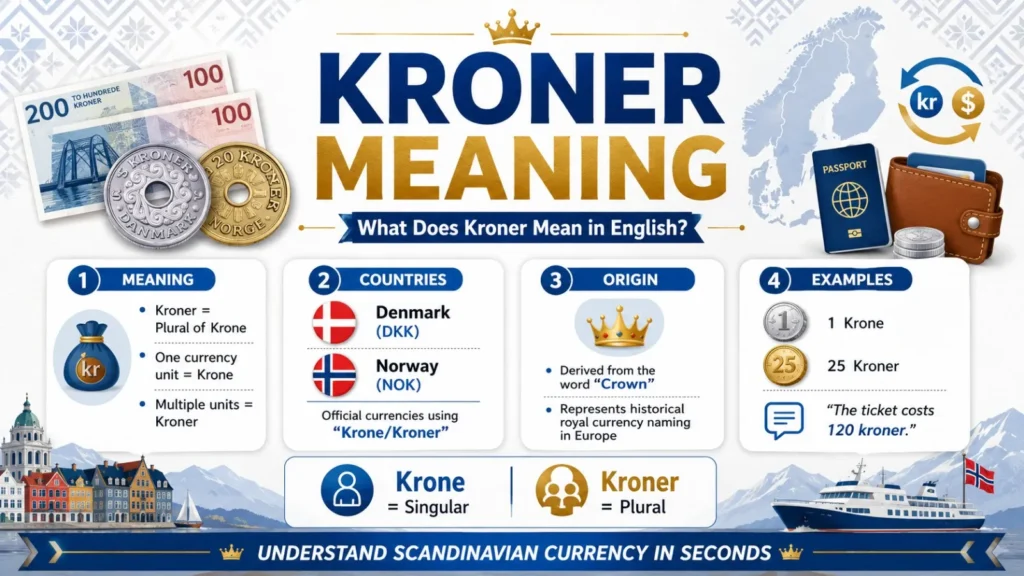
Kroner means more than one krone. A krone is one unit of currency, and kroner is the plural form used for multiple units. Cambridge defines krone as the standard unit of money used in Denmark and Norway.
Quick Meaning Summary
| Term | Meaning | Use |
| Krone | Singular currency unit | 1 krone |
| Kroner | Plural currency units | 10 kroner |
| English idea | Crown-linked currency name | Used in Denmark and Norway |
Kroner vs Krone: What Is the Difference?
This is the main point that confuses many readers.
Krone = singular
Kroner = plural.
That means you say:
- 1 krone
- 25 kroner
- 1 Danish krone
- 50 Norwegian kroner
Which Countries Use Kroner?
The word kroner is most closely associated with Denmark and Norway. The European Commission says Denmark has not introduced the euro and has an EU opt-out from joining it; Norges Bank states that the Norwegian krone is Norway’s currency.
Why Is It Called Kroner?
The name comes from the idea of a crown. Merriam-Webster notes that several “crown” currencies in Europe trace back to the Latin corona, meaning crown. That is why krone and kroner are connected to royal symbolism and historical currency naming.
How to Use Kroner in a Sentence
Here are simple examples:
- I exchanged 500 kroner before my trip to Oslo.
- The ticket cost 120 kroner.
- She paid 75 kroner for lunch.
- We still have some Danish kroner left in cash.
Use kroner when the amount is more than one unit.
Is Kroner the Same as Danish Krone?
Not exactly.
Kroner is the plural word.
Danish krone is the currency name used in Denmark.
So you write:
- 1 Danish krone
- 10 Danish kroner
The same pattern works for Norway:
- 1 Norwegian krone
- 10 Norwegian kroner
Origin and History
The modern Danish krone replaced the rigsdaler, and Danmarks Nationalbank describes the krone as part of Denmark’s long monetary History. The bank also explains that Denmark has kept the krone stable against the euro through a fixed exchange-rate policy.
For Norway, Norges Bank identifies the Norwegian krone as the national currency and provides official exchange-rate and legal-tender information for it.
How Kroner Is Used in Real Life
You will usually see kroner when:
- checking prices in Denmark or Norway
- exchanging money before travel
- reading bank or currency-converter pages
- comparing Scandinavian costs
For exact exchange values, official or live currency pages are better than older articles, because exchange rates change regularly. Danmarks Nationalbank and Norges Bank both publish currency data and exchange-rate information.
Common Misunderstandings
A common mistake is thinking kroner is a completely separate word from krone. In reality, it is just the plural form. Another misunderstanding is assuming it belongs only to Denmark, when Norway also uses the krone.
Another point Worth Remembering: the word is not slang in standard English. It is a normal currency term.
Related Terms and Similar Meanings
Here are useful related terms:
- Krone
- DKK
- NOK
- currency
- exchange rate
- crown
- Scandinavian money
People Also Ask
A: Kroner is plural, while krone is singular. That is the easiest way to remember it.
A: It means multiple units of the krone currency used in Denmark and Norway.
A: No. It is used in Denmark and Norway. Denmark uses the Danish krone, and Norway uses the Norwegian krone.
A: Because “crown” is the historical idea behind many European crown currencies, including krone-related names.
A: No. In standard English, it is a currency term, not slang.
Conclusion
Understanding the kroner meaning is straightforward once you know the difference between krone and kroner. A krone is a single unit of currency, while kroner refers to multiple units. Today, the term is primarily associated with the official currencies of Denmark and Norway, and its name comes from the historical word “Crown,” reflecting Europe’s long tradition of crown-based currencies.
Whether you’re planning a trip, exchanging money, reading financial news, or simply expanding your vocabulary, knowing the correct meaning and usage of kroner helps you understand prices and currency references with confidence. Remember this simple rule: 1 krone, 2 or more kroner.
If you enjoy learning the meanings of words, currencies, abbreviations, and internet terms, explore our other meaning guides on Capzoon to expand your knowledge with clear, accurate, and easy-to-understand explanations.