Introduction
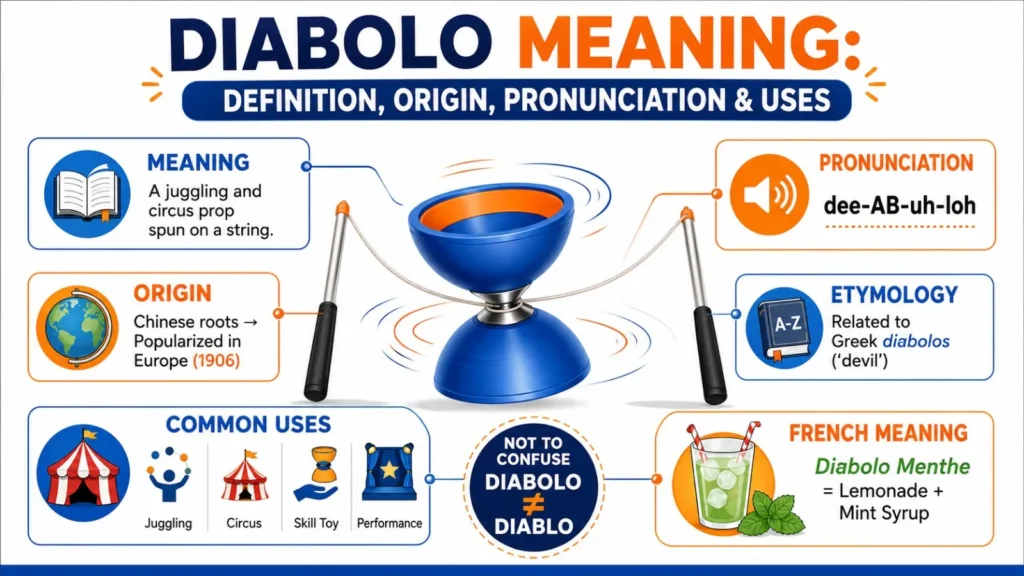
If you searched for Diabolo Meaning, you probably want a fast answer, not a word-history lecture. In modern English, diabolo most commonly refers to a juggling or circus prop shaped like an hourglass or two cups, spun on a string stretched between two sticks. Major dictionary sources agree on that core meaning.
But the word is more interesting than a simple definition. It has a clear pronunciation, a devil-related etymology, a toy history connected to China and Europe, and even a separate French drink usage in expressions such as diabolo menthe. That is why a complete article should cover meaning, origin, pronunciation, examples, and common confusions together.
Quick Meaning Summary
| Aspect | Simple Answer |
| Main meaning | A juggling or circus prop spun on a string between two sticks. |
| Also means | The game or skill performed with that prop, and the top itself. |
| Pronunciation | Commonly heard as dee-AB-uh-loh in American English and dɪˈæbəˌləʊ in British English. |
| Word family | Related to devil-like forms such as diabol- and diablo. |
| Extra cultural use | In French, diabolo menthe can mean a mint-and-lemonade drink. |
What Does Diabolo Mean?
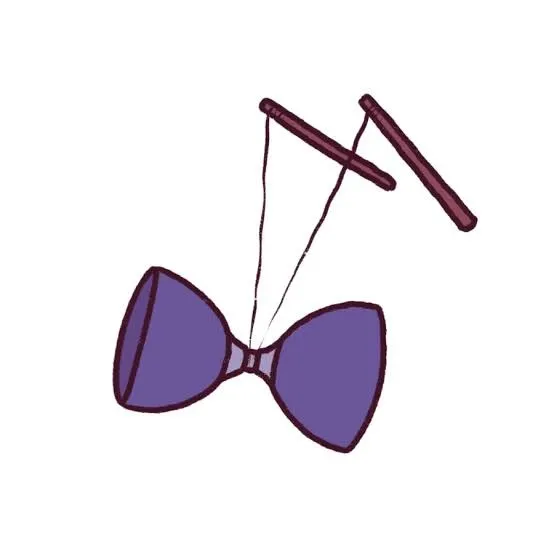
Diabolo means a game, performance skill, or toy in which an hourglass-shaped top is spun on a string held between two sticks. It can refer to the activity itself or to the object used in the activity. Merriam-Webster, Dictionary.com, and Collins all describe it this way.
In simple terms, a diabolo is the spinning object, and it is also the name of the trick-based game built around that object. That is the clearest answer for most searchers.
Origin and History
The word’s history is tied to a devil-related root family. Merriam-Webster says the English noun comes from the trademark Diabolo. Dictionary.com gives an early-1900s dating and traces it through Italian with the literal sense “devil,” while Collins says it is a twentieth-century word from Italian, literally “devil.” The OED also treats it as a borrowing from French.
The toy history is broader than the word history. A related toy was long known in China, and later European references describe the diabolo as a prop adopted and reinvented in the West. That makes the term useful for both language history and toy history searches.
Pronunciation and Spelling
The most common pronunciation in American English is dee-AB-uh-loh. British English sources also give pronunciations close to dɪˈæbəˌləʊ and diˈab(ə)ləʊ.
A common spelling mistake is diablo, which can create confusion because diablo is a different word. If you are writing for search users, spelling clarification is worth including early in the article.
Diabolo vs. Diablo vs. Diabolo Menthe
| Term | Meaning | Main Context |
| Diabolo | A juggling prop or the game built around it. | Toy, circus, juggling |
| Diablo | A separate word meaning “devil” in Spanish. | Language, religion, culture |
| Diabolo menthe | A French drink made with lemonade and mint syrup. | Food and drink |
This comparison helps users instantly separate the toy meaning from the devil-related spelling family and the French drink usage. That Clarity improves both readability and search satisfaction.
What Is a Diabolo Toy?
A diabolo toy is a skill prop used with two hand sticks and a string. The performer spins it, lifts it, catches it, and performs tricks that depend on momentum, balance, and rhythm. Encyclopedic and dictionary sources consistently describe it as a juggling or circus object.
That is why the word is linked with juggling, circus acts, coordination, and performance art. It is not just a toy; it is also a skill discipline.
Example Sentences
Here are natural, search-friendly examples:
- A diabolo is often used in circus performances and juggling shows.
- Many beginners search for diabolo meaning because they want to know whether it is a toy, a game, or a word with a devil-related origin.
- In French, diabolo menthe refers to a refreshing drink made with lemonade and mint syrup.
Why People Search for Diabolo Meaning
Most users are looking for one of four things: a Simple Definition, the pronunciation, the origin, or the difference between diabolo and similar-looking words. The live search results strongly support that intent pattern, which is why the best page should answer those four needs immediately on the first screen.
Related Terms and Similar Meanings
The diabol- word family is connected to devil-related meanings. Merriam-Webster lists diabol- as a combining form meaning “devil,” and dictionary and encyclopedia sources connect the broader root family to the Greek diabolos. That is why diabolo, diablo, diabolical, and related forms can feel similar even when they are used differently.
Common Misunderstandings
One common misunderstanding is thinking diabolo always means “devil.” It does not. In modern English search intent, the core meaning is the juggling prop or the game built around it. The devil-related sense is etymological, not the main dictionary definition.
Another misunderstanding is assuming diabolo and diablo are the same word. They are related in form and history, but they are not interchangeable in meaning.
People Also Ask
A: It usually means a juggling or circus prop spun on a string between two sticks, and it can also mean the game itself.
A: Common pronunciations are dee-AB-uh-loh in American English and dɪˈæbəˌləʊ in British English.
A: No. Diabolo is the toy or game, while diablo is a separate word meaning “devil” in Spanish.
A: Dictionary sources trace it through French and Italian, with devil-related roots in Latin and Greek word history.
A: The toy’s history is connected to Chinese predecessors and later European reinvention, so many references describe it as having Chinese roots and a later Western development.
Conclusion
Understanding the diabolo meaning is about more than learning a simple dictionary definition. In modern English, a diabolo is an hourglass-shaped juggling prop spun on a string between two sticks, and it can also refer to the game or performance built around that skill. Beyond its primary meaning, the word has an interesting etymological connection to the “devil” word family, a rich Cultural History linked to the Chinese yo-yo, and even a separate French meaning as a flavored lemonade drink.
Whether you searched for diabolo meaning, diabolo pronunciation, diabolo origin, or the difference between diabolo and diablo, the key takeaway is that context matters. Today, the word is most commonly associated with juggling, circus arts, and skill toys rather than anything devil-related. By understanding its definition, history, pronunciation, and real-world usage, you can confidently recognize and use the term in conversations, articles, and educational settings.