Korean Slang
Korean Slang is the informal, relaxed side of Korean that people use in daily conversation, texting, K-dramas, gaming chats, memes, and social media. It often comes from shortened words, playful expressions, or English-based sounds adapted into Korean. That makes it fun and expressive, but it also means slang can be easy to misuse if you do not understand the tone, relationship, or setting. Korean slang is especially useful for learners because it appears everywhere in real-life language use, from casual chats to modern online culture.
Quick Meaning Summary
| Topic | Simple Meaning |
| Korean slang | Informal words and expressions used in casual settings |
| Korean text slang | Short forms used in messages and chats |
| Korean internet slang | Slang used online, in comments, gaming, and communities |
| Best use | Friends, casual chat, online spaces |
| Main warning | Do not overuse slang with elders, teachers, or strangers |
What Does Korean Slang Mean?
Korean slang means informal vocabulary that native speakers use to sound natural, funny, emotional, trendy, or close with others. It can express surprise, excitement, agreement, boredom, attraction, or stress in a short and memorable way. In practice, slang is not just “cool words”; it is part of how Koreans show closeness and identity in everyday speech and online culture.
Korean Slang vs Text Slang vs Internet Slang
These terms overlap, but they are not identical.
| Type | What it means | Where you see it |
| Korean slang | Broad informal language | Daily speech, K-dramas, chat |
| Text slang | Short forms used in messages | KakaoTalk, DMs, SMS |
| Internet slang | Online community language | Comments, gaming, social media |
A strong article should explain all three together because learners often see them mixed in one conversation. That is one reason broad list posts do well, but they still miss the bigger picture of how and when each type is used.
Why Koreans Use Slang
People use slang because it is faster, friendlier, and more expressive than textbook-style wording. It can make a message feel warmer, funnier, or more natural in casual conversation. Slang is also tied to group identity, so using the right expression can make someone feel more connected to a community, fandom, or friend group.
How Korean Slang Is Formed
Korean slang is often created in three main ways: shortening a longer phrase, borrowing English sounds, or turning a normal expression into a trendy shortcut. Many text forms are built from initials, repeated consonants, or compressed spell-like structures. That is why learners see forms like ㅋㅋ, ㅇㅇ, and ㄴㄴ so often in chats.
The Most Common Korean Slang Words
Here are some of the safest and most useful words for beginners.
| Korean | Romanization | Meaning | Best Use |
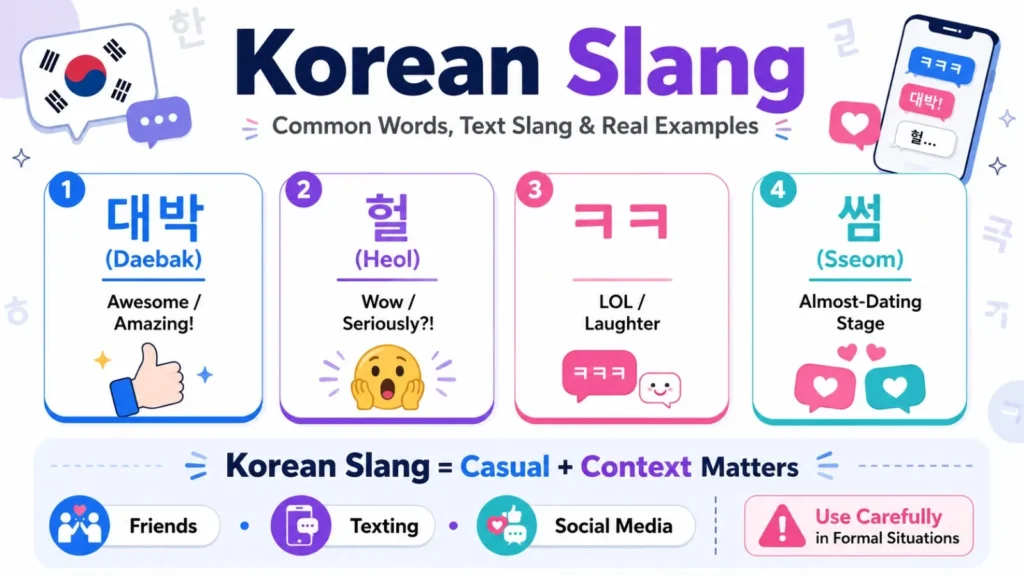
| 대박 | daebak | awesome, amazing, jackpot | reactions |
| 화이팅 | hwaiting | you can do it, good luck | encouragement |
| 짱 | jjang | the best, super cool | praise |
| 헐 | heol | wow, oh my god | surprise |
| 꿀잼 | kkuljaem | very fun | Entertainment |
| 노잼 | nojaem | boring, not fun | entertainment |
| 베프 | bepeu | best friend | friendship |
| 남친 / 여친 | namchin / yeochin | boyfriend/girlfriend | relationships |
| 모쏠 | mossol | never dated | casual talk |
| 썸 | sseom | almost-dating stage | dating talk |
| 멘붕 | menbung | mental breakdown, overwhelmed | stress or shock |
| 막장 | makjang | absurd, over-the-top | drama or chaos |
| 콜 | kol | sure, I’m in | quick agreement |
| 프사 | peusa | profile picture | social media |
Mainstream Korean-learning guides often include words like 대박, 짱, 베프, 남친/여친, 모쏠, 치맥, 불금, 프사, and 썸 because people use them frequently in everyday conversations; they are practical, and beginners can remember them easily.

Korean Slang for Reactions
Reaction slang is one of the easiest entry points for learners. Use 대박 when something is amazing, 헐 when you are shocked, 짱 when you want to praise something, and 멘붕 when something feels overwhelming. These expressions are common because they are short, emotional, and instantly recognizable in conversation.
Korean Slang for Compliments
For compliments, 짱 and 대박 are the most beginner-friendly choices. They work well for food, photos, performances, achievements, and fun moments. If you want to sound natural without sounding too formal, these are among the easiest Korean slang words to start with.
Korean Slang for Relationships
Relationship slang is one of the biggest missing pieces in weaker competitor content. Words like 베프, 남친, 여친, 모쏠, and 썸 show up constantly in casual talk, dating conversations, and K-drama dialogue. Relationship-based terms matter because they help you understand not just the meaning, but also the emotional context behind the conversation.
Korean Text Slang You Will See Online
Korean texting slang is short and very common in casual online spaces. Examples include ㅋㅋ for laughter, ㅎㅎㅎ for softer laughter, ㅇㅇ for “yes,” ㅇㅋ for “okay,” ㄴㄴ for “no no,” and ㅈㅈ for “GG.” These forms are especially common in chats, games, and direct messages, where speed matters.
Slang in K-Dramas and K-Pop
Many learners first meet slang through K-dramas, idol interviews, fan chats, or comment sections. That is why a good guide should explain not only meaning, but also tone. Some expressions are playful, some are warm, and some are too casual for older people or formal settings. The best beginner articles do more than translate; they teach context.
Slang You Should Avoid
Not every slang word is safe everywhere. Some terms are friendly and harmless, while others can sound rude, overly casual, or disrespectful if used with elders, teachers, coworkers, or strangers. A useful guide should label slang as safe, casual, or risky so readers can avoid embarrassing mistakes.
How to Use Korean Slang Naturally
Start with common, low-risk words like 대박, 짱, 헐, 화이팅, ㅋㅋ, and ㅇㅇ. Use them first in friendly conversations and casual online spaces. Then match the tone of the other person before trying newer or more playful slang. That is the most natural way to learn without sounding forced.
Common Beginner Mistakes
A common mistake is using slang before understanding formality. Another mistake is mixing up spoken slang, text slang, and internet slang as if they are all the same thing. The easiest fix is to learn slang by category and always check the relationship, setting, and tone before using it.
Fast Tips to Learn Korean Slang
Learn slang in groups instead of random words. First learn reactions, then compliments, then Relationship Terms, then texting shortcuts. This method makes the words easier to remember and easier to use in real conversations.
Related Terms and Similar Meanings
Useful related terms include formal speech, informal speech, honorifics, romanization, texting abbreviations, KakaoTalk slang, K-drama phrases, and internet culture. These entities help readers understand where slang fits inside the bigger Korean language system.
People Also Ask
A: It is usually described as informal or casual vocabulary used in everyday conversation. In learning guides, slang is often grouped under the broader idea of 속어 or casual speech.
A: Not always. Some slang is playful and friendly, but some expressions are too casual for formal situations, so context matters.
A: Very common examples include 대박, 짱, 헐, 화이팅, ㅋㅋ, ㅇㅇ, and ㄴㄴ.
A: Both express laughter, but ㅋㅋ is more standard and common in casual chat, while ㅎㅎㅎ feels softer.
A: Usually not unless the relationship is very casual and friendly. Slang is safest in relaxed settings with people your age or close friends.
Conclusion
Korean slang is an important part of understanding Modern Korean Communication. From everyday expressions like 대박 (daebak) and 헐 (heol) to texting shortcuts such as ㅋㅋ, ㅇㅇ, and ㄴㄴ, these words make casual conversations more natural, expressive, and fun.
The key is to learn Korean slang in context. A word that sounds friendly between close friends may be too casual for a teacher, older person, coworker, or stranger. Pay attention to tone, relationship, age, and formality before using a new expression.
If you are a beginner, start with common reaction words, compliments, relationship terms, and simple texting slang. As you become more comfortable with Korean, you can gradually understand newer internet expressions and slang used in K-dramas, K-pop communities, gaming, and social media.
In short, learning Korean slang meaning is not just about memorizing translations—it is about understanding how real people communicate. Keep this guidebook marked as you discover new Korean slang, and always check the context before using an unfamiliar expression.