Introduction
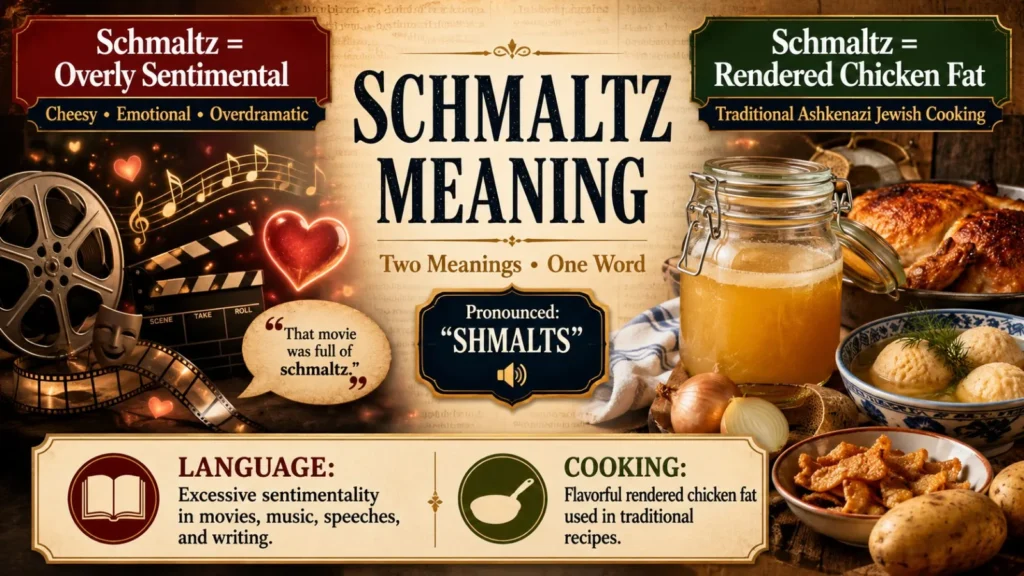
The word schmaltz can confuse people because it has two legitimate meanings in English. In everyday speech, it usually means something overly sentimental, sugary, or emotionally overdone. In cooking, it means rendered chicken fat or poultry fat, especially in Jewish cuisine. Major dictionaries and culinary references confirm both senses, which is why the word often appears in two very different conversations.
That dual meaning is also what makes Schmaltz Meaning such a useful search term. Some readers want the slang or figurative sense used for music, movies, or speeches. Others want the food meaning because they saw it in a recipe or a Jewish cooking article. A strong explanation has to cover both clearly, without making the reader guess which meaning is intended.
Quick Meaning Summary
| Term | Meaning | Common Use | Tone |
| Schmaltz | Excessive sentimentality; overly emotional art or music | Reviews, commentary, informal speech | Usually disapproving |
| Schmaltz | Rendered chicken fat or poultry fat | Jewish cooking, recipes, food writing | Neutral to positive in culinary context |
| Schmaltzy | Full of schmaltz; overly sentimental | Describing songs, movies, scenes | Usually negative |
| Schmalz | Variant spelling in some dictionaries | Same word family | Same meaning family |
What Does Schmaltz Mean?
Schmaltz usually refers to extreme or excessive sentimentality when used to describe art, music, movies, or writing. Merriam-Webster defines it as “extremely or excessively sentimental” music or art, while Collins and Dictionary.com also describe it as excessive sentimentality or exaggerated sentimentalism.
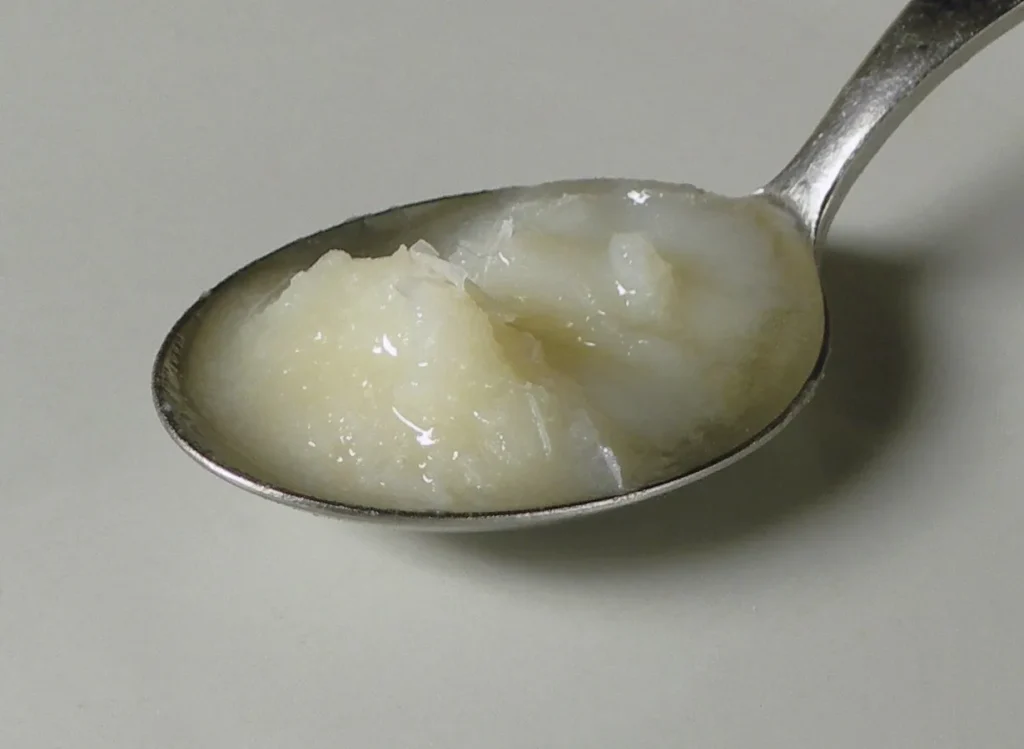
In the kitchen, schmaltz means rendered chicken fat or poultry fat. Collins, Dictionary.com, American Heritage, Chabad, and Allrecipes all describe the cooking sense this way, especially in Jewish cooking.
Pronunciation of Schmaltz
The word is commonly pronounced like “shmalts”. Merriam-Webster gives pronunciation variants such as ˈshmȯlts and ˈshmälts, Collins lists British and American pronunciations, and American Heritage shows (shmälts).
Pronunciation tip
Say it in one quick syllable: shmaltz. The ending sounds like “halts” or “salts”, not like “sch-mall-tiz.”
Origin and History
The word comes through Yiddish and is linked to the German word Schmalz, which means melted or rendered fat. Collins, Dictionary.com, and American Heritage all trace the word back through Yiddish and German, and Dictionary.com explains that the older sense referred to rendered chicken fat before the figurative meaning became common in English.
According to Chabad, Eastern European Jewish communities relied on schmaltz because it was practical, flavorful, and fit kosher dietary rules that did not allow butter in meat dishes. Allrecipes also highlights its role in classic recipes such as matzo balls, chicken liver pâté, roasted potatoes, and latkes, where it adds rich flavor and texture.
The figurative meaning developed later in American English, where it came to describe something overly drippy, dramatic, or sentimental. Chabad explicitly connects that shift to American entertainment, while Merriam-Webster, Collins, and Dictionary.com define the modern figurative sense as excessive sentimentality.
Schmaltz vs. Schmaltzy vs. Schmalz
| Word | Part of Speech | Meaning |
| Schmaltz | Noun | Excessive sentimentality or rendered chicken fat |
| Schmaltzy | Adjective | Full of schmaltz; overly sentimental |
| Schmalz | Variant spelling | Same word family, used in some dictionaries and contexts |
Schmaltz Meaning in Everyday English
In modern everyday English, schmaltz is usually used to criticize something that feels too emotional or too sweet. That could be a movie scene, a love song, a TV soundtrack, or a speech that feels forced. Merriam-Webster, Collins, Dictionary.com, and American Heritage all describe this as excessive sentimentality, exaggerated sentimentalism, or maudlin sentimentality.
Example sentences
- The ending was pretty, but it crossed into schmaltz.
- The song had Emotional Power without becoming schmaltzy.
- The speech was full of schmaltz and felt a little fake.
Schmaltz Meaning in Cooking

In cooking, schmaltz means rendered poultry fat, most often chicken fat. Allrecipes explains that it is used for rich flavor, and Chabad notes its role in Jewish and kosher cooking traditions. Dictionary.com, Collins, and American Heritage also list the food sense directly.
Common culinary uses
- frying onions
- roasting potatoes
- enriching soups
- making matzo balls
- flavoring chicken liver dishes
- replacing butter in meat-based kosher cooking
How schmaltz is made
Schmaltz is made by slowly rendering chicken skin and fat until the fat melts out, then straining it and storing it for later use. Allrecipes describes a slow simmering process, sometimes with onion added for extra flavor.
Is Schmaltz Always Negative?
No. The figurative meaning is usually negative or disapproving, because it suggests something is too sentimental. But the cooking meaning is neutral or positive, because it refers to a valued traditional ingredient. Merriam-Webster, Collins, and Dictionary.com all frame the figurative sense as excessive or sentimental, while the culinary sense is treated as a real food term.
Common Misunderstandings
1) “Schmaltz only means cheesy emotion.”
Not true. It also has a very real cooking meaning: rendered chicken fat.
2) “Schmaltz and schmaltzy mean the same thing.”
Not exactly. Schmaltz is the noun, while schmaltzy is the adjective used to describe something full of schmaltz.
3) “It is slang only.”
No. It is a dictionary word with historical roots, a figurative English meaning, and a cooking meaning.
Real-World Examples
- The film tried hard to make the audience cry, but the emotion felt like schmaltz.
- Traditional Jewish recipes sometimes use schmaltz for deep, rich flavor.
- A review might call a love ballad schmaltzy if it Feels too Sweet.
- A recipe might ask for schmaltz instead of oil or butter.
People Also Ask
A: It means either overly sentimental art or music or rendered chicken fat. The intended meaning depends on context.
A: It is commonly pronounced shmalts. Dictionary sources give variants such as ˈshmȯlts and ˈshmälts.
A: Yes. The modern English word comes through Yiddish, with roots linked to German Schmalz.
A: It means something is full of schmaltz, especially in a way that feels overly emotional or cheesy.
A: Yes. It is still used in recipes and remains well known in Jewish cooking, especially for dishes like matzo balls and latkes.
Conclusion
The meaning of “schmaltz” depends entirely on the context in which it is used. In everyday English, schmaltz refers to excessive or overly sentimental emotion, often describing movies, songs, speeches, or stories that feel too sweet or emotionally manipulative. In cooking, however, schmaltz refers to rendered chicken fat, a traditional ingredient that has been an important part of Ashkenazi Jewish cuisine for generations.
Understanding these two distinct meanings makes it much easier to recognize the word when reading reviews, recipes, books, or online conversations. If you’re discussing entertainment, schmaltz usually has a figurative meaning. If you’re talking about food, it almost always refers to the flavorful cooking fat.
Whether you searched for “schmaltz meaning,” “what does schmaltz mean,” or “schmaltz definition,” the key takeaway is simple: schmaltz has two legitimate meanings—one describing excessive sentimentality and the other describing rendered poultry fat used in cooking. Knowing the context is the easiest way to understand which meaning is intended.
For more word definitions, Slang Explanations, and language guides, explore our growing collection of meaning articles to expand your vocabulary and understand the stories behind everyday words.