Solace Meaning: What Does Solace Mean?
If you searched for Solace Meaning, you probably want a clear and simple answer. In everyday English, solace means comfort, relief, or reassurance during sadness, grief, worry, or disappointment. It is a gentle and often emotional word that appears in formal writing, literature, and thoughtful speech more often than in casual conversation.
The word can be used as both a noun and a verb, which makes it more flexible than many people expect. As a noun, it refers to the comfort itself. As a verb, it means to comfort or console someone. That is why you may see sentences like “music was her solace” or “his friends solaced him after the loss.”
This guide explains the meaning of solace, its origin, pronunciation, synonyms, antonyms, and common examples. You will also see how it differs from words like comfort and consolation, so you can use it correctly in writing and conversation.
Quick Meaning Summary
| Word | Simple Meaning | Common Use | Tone |
| Solace | Comfort during sadness or pain | Formal writing, emotional speech | Gentle, reflective |
| Comfort | General ease or relief | Everyday language | Neutral |
| Consolation | Comfort after disappointment or loss | Formal and emotional contexts | Slightly formal |
What Does Solace Mean?
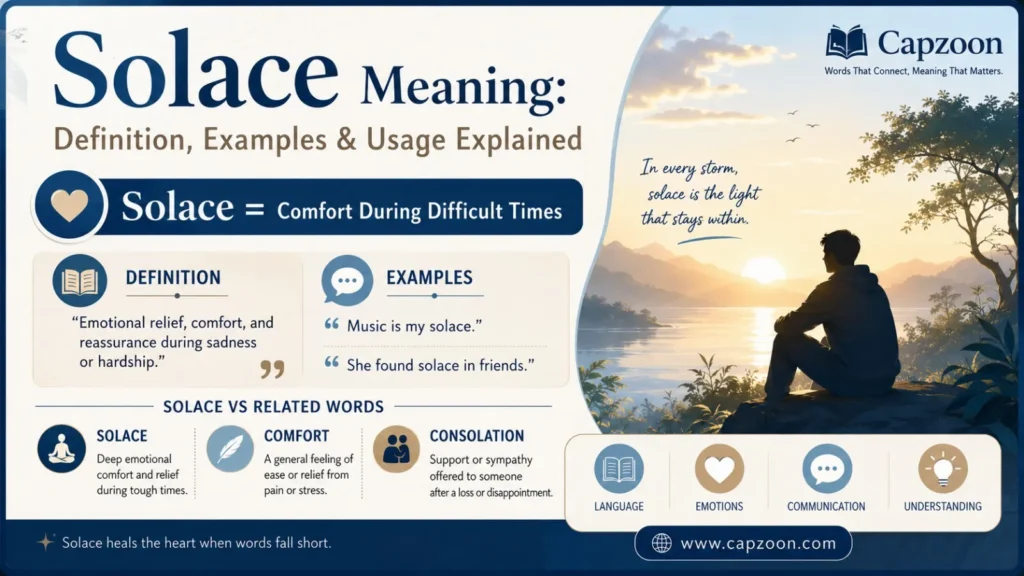
Solace means emotional comfort, relief, or reassurance in difficult times. It is often used when someone is dealing with grief, loneliness, sadness, fear, or disappointment.
In simple English:
Solace = comfort that helps you feel better when life hurts.
Dictionaries such as Merriam-Webster, Cambridge, Oxford, and Collins all connect the word with comfort, grief, relief, and consolation. That is why the word often feels serious, thoughtful, and deeply emotional.
Is Solace a Noun or a Verb?
Solace can be used in two ways.
As a noun
It means comfort or relief.
Examples:
- Music was a solace after the breakup.
- Her family became his solace during a hard year.
As a verb
It means to comfort or console someone.
Examples:
- The kind message solaced her after the bad news.
- He was solaced by the presence of his friends.
Solace Pronunciation
The word is usually pronounced like:
- SAH-lis
- SOL-uhs
The exact sound depends on accent, but both are commonly understood.

Origin and History of Solace
The word solace has a Long History in English. It came into English in the medieval period through Old French and Latin.
Its root is linked to the Latin word solari, which means to console or to comfort. That origin fits the modern meaning very well because the word has always been connected to easing pain and bringing relief.
Solace vs Comfort vs Consolation
These words are similar, but not the same.
Comfort is the broadest word. It can mean physical ease or emotional reassurance.
Consolation usually refers to comfort after loss, failure, disappointment, or grief.
Solace feels more emotional and reflective. It often suggests deep relief during pain or sadness.
Simple comparison
- Comfort = general ease
- Consolation = comfort after hurt
- Solace = emotional relief that helps you carry pain
How Is Solace Used in Real Life?
People use solace in writing when they want to sound thoughtful, emotional, or literary. It is common in:
- books
- poetry
- speeches
- captions
- grief-related writing
- reflective posts
It is less common in casual texting because it sounds formal rather than slang-like.
Examples of Solace in Sentences
Here are practical examples:
- She found solace in music after the breakup.
- His family was a great solace during the illness.
- Reading became her solace after long, stressful days.
- He took solace in the fact that the situation was finally over.
- Their friendship gave him solace when he needed it most.
- Many people find solace in prayer, nature, or art.
- The quiet room offered her some solace after the noise outside.
- His kind words brought solace to the grieving family.
Take Solace Meaning
The phrase take solace means to find comfort or relief in something.
Examples:
- She took solace in the support of her closest friends.
- He took solace in knowing he had done his best.
- They took solace in the fact that better days would come.
Find Solace Meaning
The phrase find solace means to discover comfort in a person, memory, place, belief, or habit.
Examples:
- She found solace in reading at night.
- He found solace in prayer after the loss.
- They found solace in each other during difficult times.
Solace Synonyms and Antonyms
Synonyms
- comfort
- consolation
- relief
- reassurance
- encouragement
- sympathy
- support
Antonyms
- distress
- misery
- sorrow
- anguish
- discomfort
- pain

Solace in Text, Chat, and Social Media
People sometimes search for the meaning in text because the word appears in captions, poems, breakup posts, or reflective updates.
It is not slang, but it can sound beautiful, calm, and Aesthetic in online writing.
Examples:
- Nature is my solace.
- Your words were my solace tonight.
- Books have always been my solace.
Common Misunderstandings About Solace
1. It is not casual slang
Solace is a standard English word, not an internet abbreviation.
2. It is more emotional than physical
It usually refers to emotional relief, not physical comfort.
3. It sounds formal
It is common in thoughtful or literary writing, not everyday chat.
4. It can be a verb
Many people know it only as a noun, but it can also mean “to comfort.”
People Also Ask
A: Solace means comfort or relief, especially during sadness, grief, or worry. It is often used when someone needs emotional support.
A: Yes. It usually has a calm, gentle, and supportive meaning. The word often appears in emotional or healing contexts.
A: Yes. As a verb, it means to comfort or console someone. This use is less common, but it is correct.
A: Comfort is broader and more general. Solace usually refers to deep emotional relief during pain or sadness.
A: Yes. It is generally considered formal and is often used in writing, literature, and reflective speech.
Conclusion
Solace is a powerful English word that represents comfort, relief, and Emotional Support during difficult moments. Unlike simple comfort, it often describes a deeper sense of peace that helps someone cope with grief, sadness, disappointment, or hardship.
Whether you find solace in music, nature, friendships, memories, or personal beliefs, the word highlights the human need for emotional healing and reassurance. It can be used as both a noun and a verb, making it a flexible word for describing comfort and support.
In short, solace means the kind of comfort that helps you endure difficult times and find hope when things feel challenging. Understanding this word not only improves your vocabulary but also helps you express emotions in a more thoughtful and meaningful way.