Feining Meaning in Slang
Language changes fast online, and slang words often get used in more than one way before people agree on a single meaning. Feining is one of those words. Depending on the platform, community, and sentence, it can mean craving something badly, wanting something with strong intensity, or, in some pages, pretending or acting a certain way. Live search results show that the term is not fully standardized, which is exactly why readers keep searching for it.
The safest way to understand feining is this: in modern slang, it is usually connected to strong desire, obsession, or an intense craving, especially in casual speech and online text. At the same time, some sites treat it as a spelling variant or cousin of feening and fiending, while feigning remains the standard English word for pretending. That difference matters because one small spelling change can completely change the meaning.
This guide explains the meaning of feining, how people use it in text, how it compares with similar words, and why context is the key to using it correctly.
Quick Meaning Summary
| Term | Common Meaning | Best Context |
| Feining | Wanting something very badly; intense craving | Casual slang, text, social media |
| Feening | Strong craving or obsession, often for drugs or something desired | Casual slang, addiction-related context |
| Fiending | Intense craving, especially for drugs, but also other desires | Informal speech, slang dictionaries |
| Feigning | Pretending or faking something | Standard English writing |
The live results show that feining and fiending are the more established forms in dictionary-style sources, while feigning is the formal English verb meaning to pretend. Feining is used more loosely online and in slang-heavy pages, so context decides the meaning.
What Does Feining Mean in Slang?
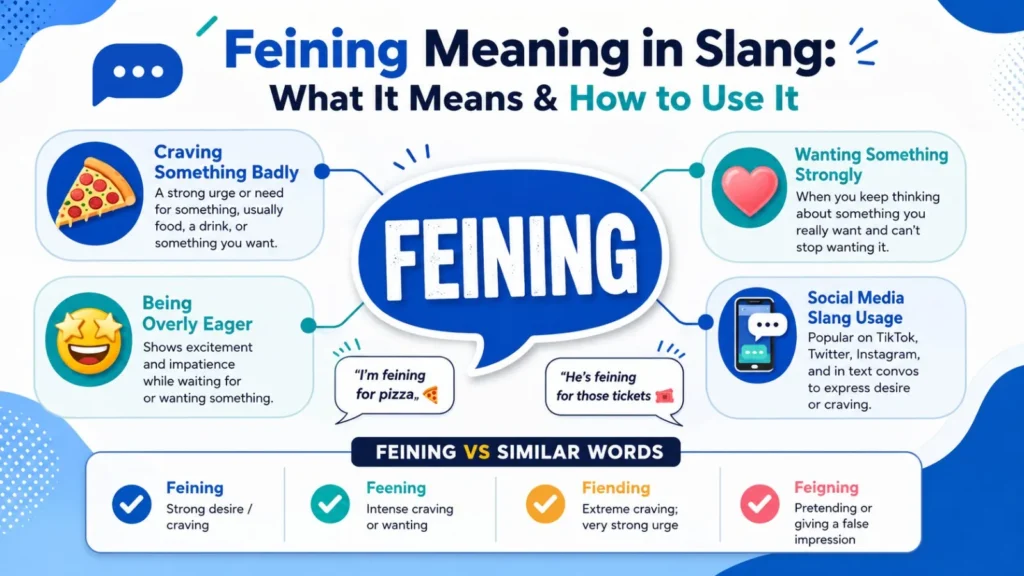
In slang, feining usually means wanting something very badly or craving it intensely. People may use it about food, attention, money, a person, music, tickets, or any other thing they feel strongly drawn to.
Examples:
- “I’m feining for pizza right now.”
- “He’s feining for those concert tickets.”
- “She’s feining for attention again.”
In each case, the word suggests a strong pull or over-the-top desire. Some pages also use the word more critically, as if someone is acting desperate or too eager. That is why tone is just as important as spelling.
How Is Feining Used in Text?
In texts, DMs, captions, and comment threads, feining sounds casual and exaggerated. People use it when they want to make a craving sound funny, dramatic, or relatable. Live results show it appearing in slang explainers and social-style pages with examples like wanting pizza, music, or tickets.
Common texting style:
- “I’m feining for sleep.”
- “Bro is feining for that new drop.”
- “She’s feining for attention.”
This kind of wording is informal. It works well in social media posts and casual chats, but it is not ideal for school essays, business emails, or professional writing.
Feining vs. Feening vs. Fiending vs. Feigning
These words are close in spelling, but not in meaning.
Feining
Used online as slang for wanting something very badly, craving something, or acting overly eager. Some sources also treat it as a loose spelling variant of related slang.
Feening
A more established slang form tied to an intense craving. Dictionary-style sources and treatment sites commonly connect it to craving, especially around drugs or alcohol.
Fiending
A recognized informal term for strong craving, especially for a drug, though it can also describe intense interest or desire for something else.
Feigning
The standard English verb meaning pretending or faking. Cambridge and Merriam-Webster both define it as pretending to have or feel something.
Real Examples of Feigning Meaning in Slang
Here are practical examples that show how the word works in context:
“I’m feining for fries after work.”
This means the speaker has a Strong Craving for Fries.
“He’s feining for that new game.”
This means he wants the game very badly.
“She’s feining for attention again.”
This suggests someone is acting overly eager or desperate for attention.
“Stop feining and just wait your turn.”
This sounds like a playful or critical way to tell someone they are being too impatient or too intense.
Is Feining Negative?
Not always. The word can be playful, funny, or exaggerated. A friend might say it jokingly when someone wants food, sleep, music, or plans really badly. But it can also sound negative if it is used to describe desperation, obsession, or attention-seeking behavior.
In other words, the same word can sound:
- Friendly: “You’re feining for that burger, huh?”
- Funny: “I’m feining for the weekend.”
- Critical: “Stop feining so hard.”
Origin and History
The live sources do not agree on a single fixed origin for feining. Some pages link it to feign, while others connect the broader slang family to fiend and to craving language used in street slang and addiction-related contexts. Urban Dictionary also shows several competing definitions, which is a sign that the word has shifted across communities over time.
That mixed history is exactly why a good article should not force one rigid explanation. A stronger SEO page explains the main reading first, then shows the other possible interpretations and spelling connections.
Why Feining Is Popular
Feining is popular because it is short, expressive, and easy to use in casual speech. It fits the style of social media, where people often stretch words for humor or emphasis. Search results also show that many readers are looking for this term because they saw it in slang-heavy content or confused it with a similar spelling.
It is especially useful in:
- texting
- TikTok Captions
- Instagram comments
- Snapchat chats
- casual group chats
Common Misunderstandings
1. Thinking feining always means pretending
That meaning belongs to feigning, the standard English word. The slang usage of feining is usually closer to craving or wanting something badly.
2. Assuming all sources agree
They do not. Some pages define it as craving, others as pretending, and some are focused only on addiction language. That is why context is essential.
3. Using it in formal writing
This word belongs to informal language. It is best avoided in professional or academic writing unless you are quoting slang directly.
Related Terms and Similar Meanings
If you want to say the same idea more clearly, you can use:
- craving
- wanting badly
- obsessed
- eager for
- desperate for
- hooked on
- dying for
Examples:
- “I’m feining for coffee.” → “I’m dying for coffee.”
- “He’s feining for attention.” → “He’s desperate for attention.”
People Also Ask
A: It usually means craving something badly or wanting it with strong intensity. Some pages also use it for acting overly eager or desperate.
A: No. Feigning means pretending or faking something in standard English. Feining is slang and usually points to a craving or strong desire.
A: They are closely related in slang use, but feening is more established in dictionary-style references as a craving-related term.
A: Sometimes, yes. Related slang like feening and fiending often appears in addiction and craving contexts, especially in medical or recovery-focused content.
A: Yes, but only in informal settings. It works best in texts, captions, chats, and casual conversation.
Conclusion
Feining meaning in slang can be understood as having a strong craving, intense desire, or wanting something very badly. People commonly use it in casual conversations, text messages, and social media posts to express Excitement, obsession, or an exaggerated need for something. Whether someone is feining for food, attention, a new trend, or an experience, the word usually adds an emotional and dramatic tone.
However, because slang changes quickly, feining is often confused with similar-looking words like feening, fiending, and feigning. While feining, feening, and fiending are usually connected with craving or strong desire, feigning has a completely different meaning: pretending or faking something.
The best way to understand feining is to always look at the context where it appears. In casual online conversations, it can sound funny, relatable, or expressive. In formal writing, clearer words like craving, wanting badly, or desiring are usually better choices.
As internet language continues to evolve, slang terms like feining show how people creatively adapt words to communicate feelings quickly. Understanding these differences helps you use modern slang correctly and avoid confusion when reading texts, captions, comments, or online conversations.