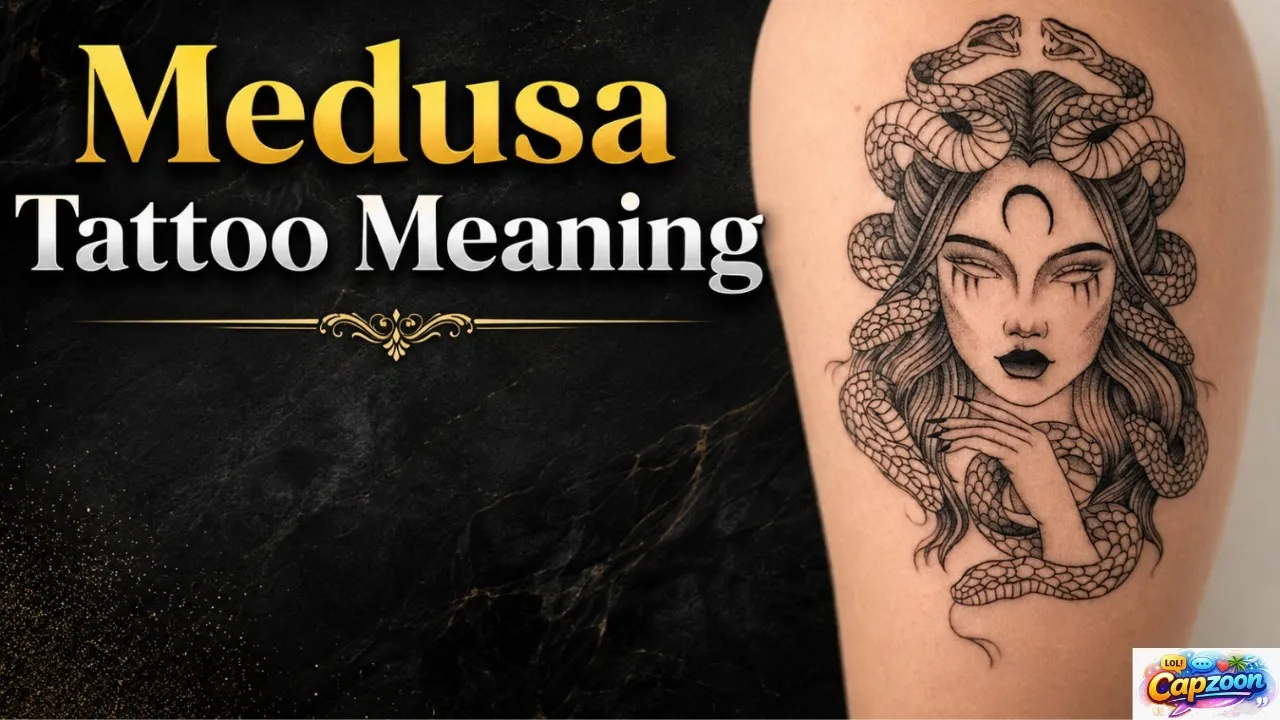
Introduction
The Medusa Tattoo Meaning is powerful because Medusa is one of the most famous figures in Greek mythology and one of the most debated symbols in modern body art. In ancient art and literature, Medusa is known for her snakes for hair and her ability to turn people to stone. In modern tattoo culture, she is often associated with strength, protection, survival, feminine power, transformation, and the reclamation of identity.
That is why this tattoo means different things to different people. Against one person, it may represent a shield against negativity. For another, it may reflect healing after pain. For someone else, it may simply be a striking mythological design with deep artistic appeal. The meaning becomes even richer when you understand the original myth, the modern reinterpretations, and the design choices that shape the final tattoo.
Quick Meaning Summary
| Aspect | Meaning |
| Core symbolism | Strength, protection, transformation |
| Modern reading | Feminine power, survival, reclamation |
| Mythological root | Greek monster with snakes for hair and a petrifying gaze |
| Emotional tone | Bold, fierce, complex, personal |
| Common use case | Personal identity tattoo or empowerment symbol |
What Is Medusa in Greek Mythology?
Medusa is best known from Greek mythology as a Gorgon with snakes in place of hair and a gaze that turns people to stone. Ancient sources and classical art show her as both fearsome and symbolic, and the image of her head was also used as the gorgoneion, an apotropaic or evil-averting emblem. That historical detail matters because many Medusa tattoos still carry a protective feeling today.
In other words, the tattoo is not just a face with snakes. It comes from a mythic image that already carried the idea of danger, defense, and power in the ancient world. That is one reason the design feels so visually intense and symbolically charged.
What Does a Medusa Tattoo Mean?
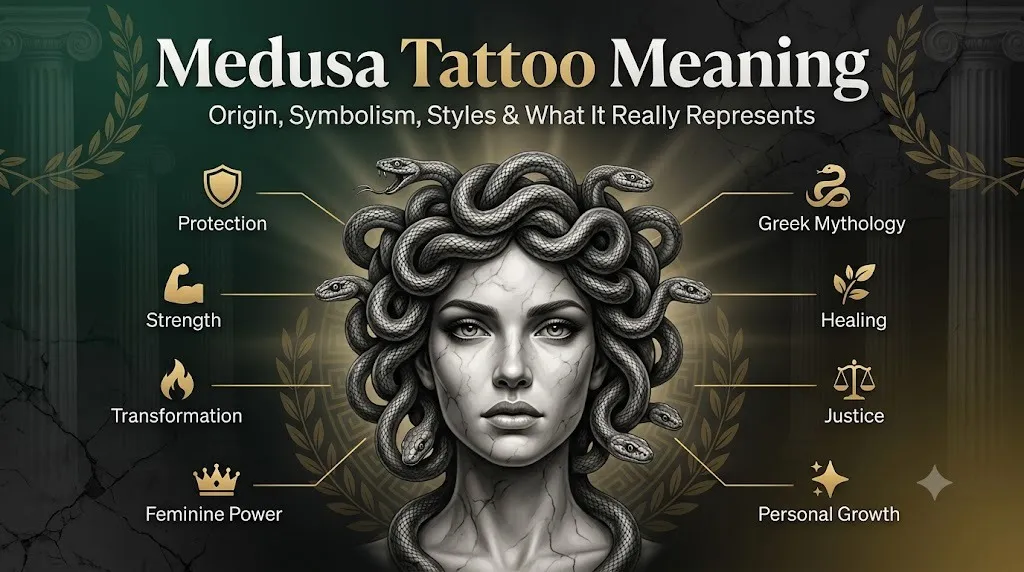
The Medusa tattoo meaning is layered, and the best interpretation depends on the wearer. Modern tattoo coverage commonly links Medusa with survival, protection, feminine energy, personal power, and transformation. Some writers and tattoo studios also note that the symbol can represent revenge, rage, or the refusal to stay silent after betrayal or harm.
Here is the simplest answer:
A Medusa tattoo usually means strength, protection, and transformation, but it can also carry deeply personal meanings such as survival, healing, and reclaiming one’s story.
Main Medusa Tattoo Meanings
1. Strength and Power

Many people choose a Medusa tattoo because it Feels Strong. Medusa is not gentle or subtle in visual language. She is dramatic, fearless, and unforgettable. That makes her a natural symbol for people who want their tattoo to express inner power or resilience. Modern tattoo articles repeatedly describe Medusa as a symbol of strength and personal power.
2. Protection
Medusa’s image has long been associated with warding off evil, and that protective reading still appears in modern tattoo explanations. Some people see the tattoo as a kind of spiritual shield against negativity, toxic behavior, or harmful energy.
3. Transformation and Rebirth
The snakes, the myth, and the dramatic visual impact all make Medusa a strong symbol of change. For many wearers, the tattoo reflects a life that has been changed by pain, loss, healing, or growth. That is why transformation is one of the most common modern interpretations.
4. Feminine Power
A large part of Medusa’s modern popularity comes from the way she has been reinterpreted as a feminist icon. Many writers and tattoo artists now frame her as a symbol of female strength, autonomy, and unapologetic presence.
5. Survival and Healing
Some people connect Medusa tattoos to survival after abuse or sexual violence. Parade specifically notes that Medusa tattoos are often read as symbols of survival, especially in the context of sexual abuse, sexual assault, or rape. This is a deeply personal meaning and should always be treated with care and respect.
6. Beauty and Danger Together
Medusa is both beautiful and terrifying. That contrast is part of her appeal. A Medusa tattoo can say that beauty is not weakness, and that danger can coexist with elegance, grace, or softness. Several modern tattoo articles emphasize this duality.
Is a Medusa Tattoo Disrespectful?
Usually, no. A Medusa tattoo is not inherently disrespectful. In fact, the design can be meaningful, respectful, and culturally aware when the wearer understands the myth and chooses the symbol with intention.
What matters most is context. Someone may choose it because they love Greek mythology, because they want a protective symbol, or because they connect with the modern survivor interpretation. The tattoo becomes problematic only when it is treated carelessly or used without any awareness of its history and meaning.
Medusa Tattoo Styles and Their Feel
Realistic Medusa Tattoo
A realistic Medusa tattoo looks intense and cinematic. It usually focuses on facial expression, snake detail, and dramatic shading. This style works well for people who want the tattoo to feel powerful and visually unforgettable.
Black and Grey Medusa Tattoo
Black and grey is one of the most common choices because it gives the design a darker, more serious mood. It also works well for highlighting contrast in the face, eyes, and snake texture.
Fine Line Medusa Tattoo
A fine line version feels softer and more elegant. It is a strong choice for someone who wants symbolism without a heavy or Aggressive Look.
Neo-Traditional Medusa Tattoo
Neo-traditional tattoos use bold outlines and rich contrast. This style is a good fit for Medusa because it gives the snakes, hair, and facial expression a strong visual identity.
Geometric or Abstract Medusa Tattoo
A geometric or abstract version feels modern, controlled, and symbolic. It works best for people who want a less literal tattoo and more of a conceptual interpretation.
Medusa With Flowers or Soft Elements
Some designs mix Medusa with flowers, vines, or moon imagery. This creates a beautiful contrast between danger and tenderness, and it often emphasizes healing, rebirth, or feminine energy.
Best Medusa Tattoo Placements
Placement can change the energy of the tattoo.
| Placement | Effect |
| Forearm | Visible, bold, easy to show |
| Upper arm | Strong but still easy to cover |
| Thigh | More private and personal |
| Back | Best for large, detailed artwork |
| Chest or sternum | Deeply symbolic and intimate |
| Shoulder | Good for portrait-style designs |

Tattoo studios commonly suggest the arm, back, thigh, chest, and wrist areas depending on size and detail. Those placements work because Medusa’s face and snakes need enough space to look balanced.
Who Gets a Medusa Tattoo?
There is no single type of person who gets this tattoo. Some people love Greek mythology. Certain want a protective design. Some are drawn to the visual impact. Others connect with the symbol as a personal marker of survival, healing, or self-reclamation.
That flexibility is a big reason the Medusa tattoo stays popular. It is both universal and private at the same time.
Things to Think About Before Getting One
Before you get a Medusa tattoo, ask yourself a few simple questions:
What does this symbol mean to me personally?
Would I prefer my tattoo to feel protective, empowering, or artistic?
Should the design be realistic, minimal, or bold?
Is it better to keep it visible every day or place it somewhere more private?
Which elements best match my vision—snakes, flowers, tears, armor, or a classical Medusa face?
The design should match the meaning. When that happens, the tattoo feels more honest and more powerful.
Common Misunderstandings
Myth 1: A Medusa tattoo always means trauma.
Not true. Some people connect it to survival, but many wearers simply like the symbolism, mythology, or style.
Myth 2: It is only for women.
Also false. Anyone can get a Medusa tattoo if the meaning feels right to them.
Myth 3: It is always a negative symbol.
Not anymore. In Modern Culture, Medusa is often seen as protective, powerful, and transformative.
Related Terms and Similar Meanings
If you are building topical authority around Medusa tattoo meaning, it helps to connect it naturally with related ideas such as:
Greek mythology tattoo meaning
feminine power tattoo
survivor tattoo symbolism
protection tattoo meaning
transformation tattoo meaning
mythological tattoo ideas
black and grey tattoo designs
realistic portrait tattoo
female empowerment symbolism
People Also Ask
A: It most often symbolizes strength, protection, transformation, and feminine power. Many modern sources also connect it to survival and reclaiming identity.
A: No, not by default. In modern tattoo culture, it is usually seen as a powerful and meaningful symbol, not a bad omen.
A: They are popular because the symbol is visually striking and emotionally flexible. People connect with the mythology, the protective meaning, the feminine-power reading, and the survival symbolism.
A: Sometimes it does, but not always. For some people, it is a symbol of survival; for others, it is a mythological, protective, or aesthetic choice.
A: Realism, black and grey, fine line, and neo-traditional are all strong choices. The best style depends on whether you want the design to feel soft, dark, dramatic, or symbolic.
Conclusion
The Medusa tattoo meaning goes far beyond a striking image of a woman with snakes for hair. Rooted in Greek mythology, Medusa has evolved into one of the most meaningful tattoo symbols, representing strength, protection, transformation, resilience, and personal empowerment. While some people choose this tattoo to honor the ancient myth, others see it as a symbol of healing, independence, or overcoming life’s most difficult challenges.
One of the reasons the Medusa tattoo remains so popular is that its meaning is deeply personal. For some, it reflects courage after adversity. For others, it serves as a reminder to stand strong, embrace change, and protect their inner peace. Its symbolism is not limited to one interpretation, allowing every wearer to give it a unique story.
Before getting a Medusa tattoo, take time to understand both its mythological roots and its modern interpretations. Choosing a design, style, and placement that aligns with your personal journey will make the tattoo even More Meaningful. Whether you prefer a realistic portrait, a fine-line illustration, or a bold black-and-grey masterpiece, the most important meaning is the one it holds for you.
Ultimately, a Medusa tattoo is more than body art—it is a timeless symbol of transformation, courage, and self-expression. When chosen thoughtfully, it becomes a powerful reminder that beauty, strength, and resilience can exist together, making it one of the most iconic and enduring tattoo designs in modern culture.